
Consultation Hotline
+1 (302) 618-8777
+1 (302) 618-8777
Current location:Home > Product > chromatograph > HPLC



PRODUCT CATEGORY
Related Articles
Detailed Introduction
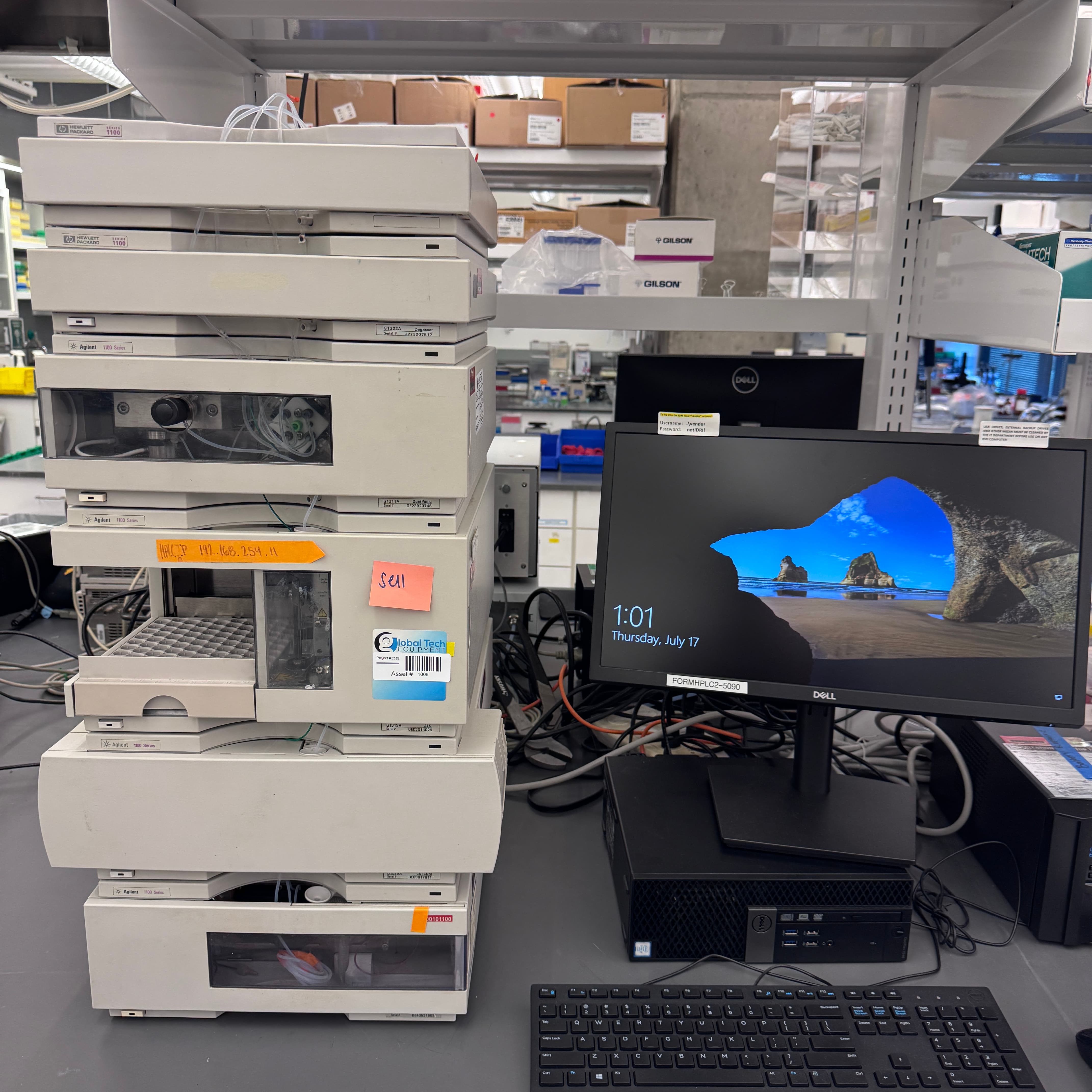
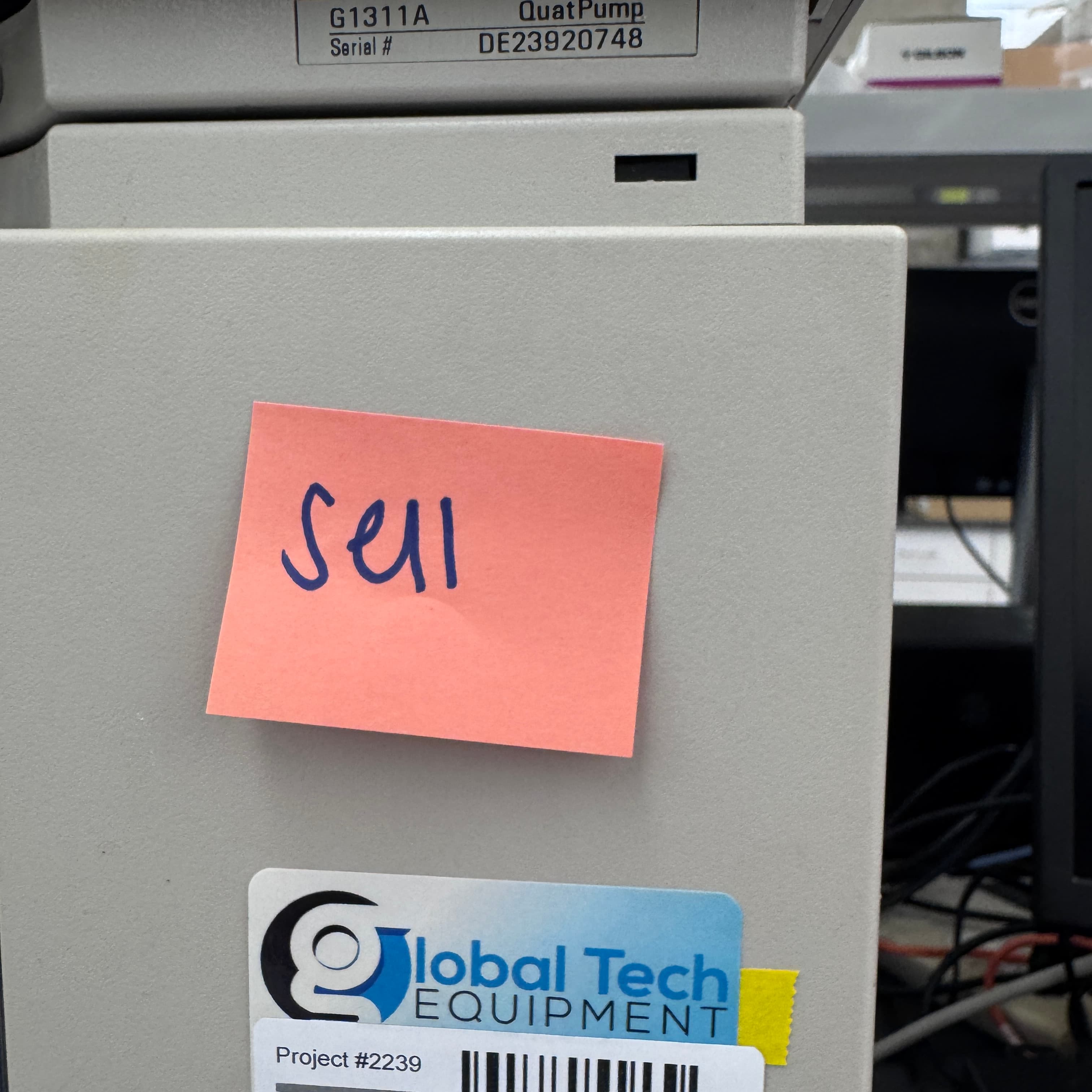
The Agilent 1100 Series HPLC system configured with a G1322A Vacuum Degasser, G1311A Quaternary Pump, G1313A Autosampler (ALS), G1316A Thermostatted Column Compartment (TCC), and G1315B Diode Array Detector (DAD) represents one of the most widely adopted modular liquid chromatography platforms in analytical history, renowned for its ruggedness, ease of maintenance, and full compliance with GLP/GMP and 21 CFR Part 11 requirements. Introduced by Hewlett-Packard/Agilent Technologies in the late 1990s, the Agilent 1100 (also known as the HP 1100) established the industry benchmark for routine quantitative analysis, method development, and stability testing in pharmaceutical QC/QA, contract research organizations, food safety labs, environmental monitoring, and academic research. The system begins with the G1322A Online Vacuum Degasser, a four-channel polytetrafluoroethylene (PTFE) membrane degasser with an integrated micro-vacuum pump that continuously removes dissolved gases from all four mobile-phase lines before they reach the pump head. By eliminating oxygen and preventing bubble formation in the gradient, the degasser ensures stable baselines and reproducible retention times even during complex multi-solvent gradients, replacing traditional helium sparging and reducing ongoing operational costs. The degassed solvents are drawn into the G1311A Quaternary Pump, which employs a dual serial floating piston design with active inlet valves synchronized to piston strokes to deliver virtually pulse-free flow. The low-pressure gradient proportioning valve (LPGV) allows any four solvents (A/B/C/D) to be blended at the inlet side across a composition range of 0–100% in 0.1% increments, giving maximum flexibility for isocratic and gradient elution without the need for high-pressure mixing manifolds. The pump operates at flow rates from 0.001 to 10.000 mL/min (0.2–5 mL/min at the full 400 bar / 5800 psi pressure rating; up to 10 mL/min at reduced pressure), with typical flow accuracy better than ±1% and flow precision RSD <0.3% at 1 mL/min. An integrated purge valve and compressibility compensation settings accommodate both aqueous and organic phases as well as buffered and non-buffered mobile phases from pH 1–12.5. The pump's Early Maintenance Feedback (EMF) feature tracks seal life and piston travel to prompt preventative servicing before failure occurs.
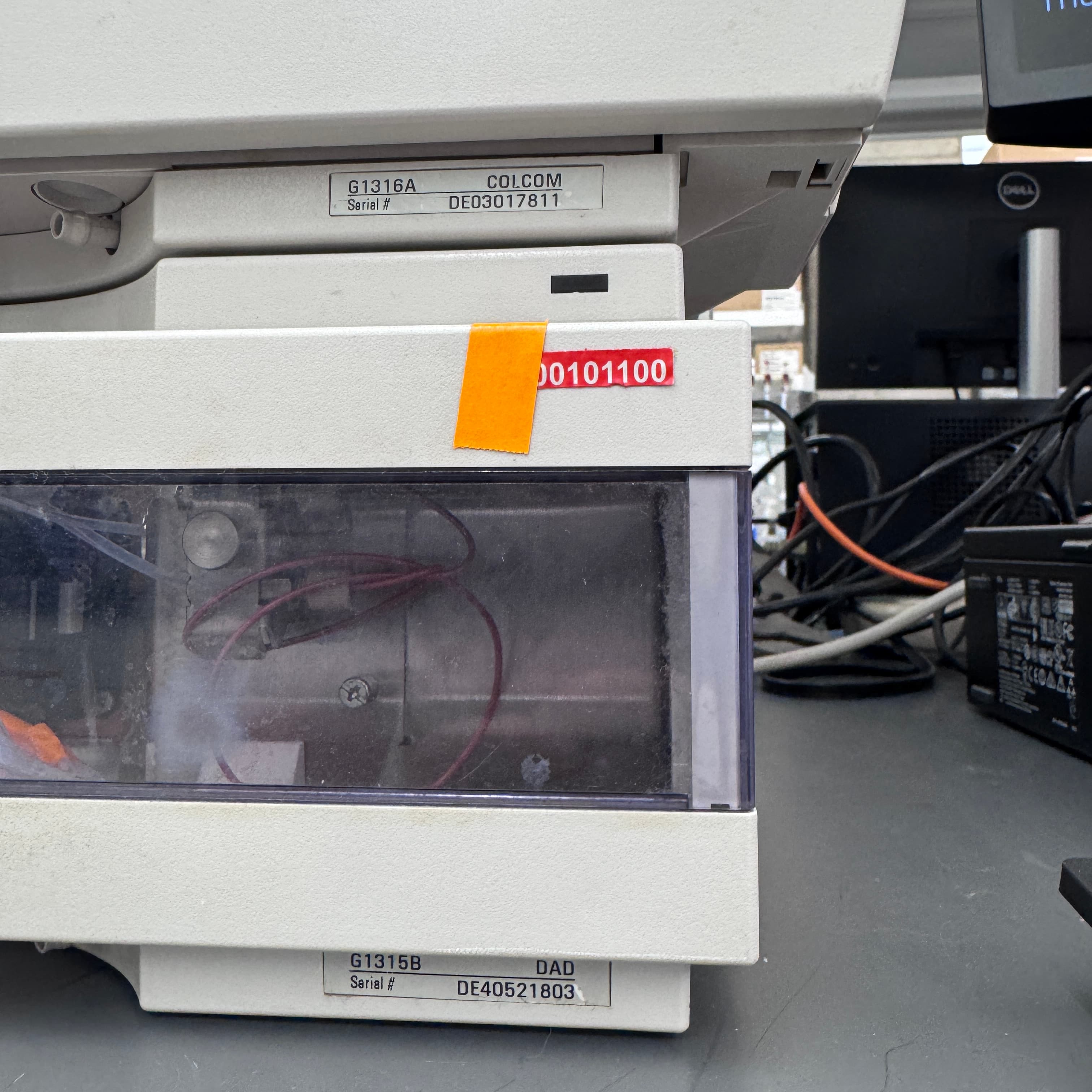
Sample introduction is handled by the G1313A Autosampler (Standard ALS), which uses a high-precision metering pump and a motor-driven Rheodyne-type injection valve to draw and inject exact sample volumes from 0.1 µL to 100 µL (extendable to 1800 µL with loop-overfill techniques) with typical injection repeatability RSD <0.5% (5–100 µL range). The standard sample tray accommodates 100 × 2 mL screw-thread vials (or optionally 40 vials plus 15 × 6 mL vials, or microplate adapters for 96-/384-well plates), and the overlapping injection function allows the next sample to be drawn while the previous run is in progress, maximizing throughput. A programmable needle wash station with user-defined solvent and duration minimizes carryover to typically <0.1% for most compounds. The injected sample travels through the G1316A Thermostatted Column Compartment, a Peltier-based oven that controls column temperature from 10 °C below ambient up to 80 °C (±0.8 °C accuracy, ±0.15 °C stability) and accommodates up to three 30 cm analytical columns on interchangeable holder kits. Solvent pre-heating in the inlet heat exchanger ensures that the mobile phase entering the column is at the set temperature, eliminating thermal band broadening and improving retention-time reproducibility. The G1316A also supports optional column-switching valves and column ID chips for automated method recognition. Following chromatographic separation, the effluent passes into the G1315B Diode Array Detector (DAD), also referred to as a Photodiode Array (PDA) detector, which houses a deuterium lamp for UV (190–350 nm) and a tungsten lamp for visible (350–950 nm) illumination, a holographic grating, and a 1024-element photodiode array enabling simultaneous acquisition of the full-spectrum absorbance data at each time point. The detector offers wavelength accuracy of ±1 nm (calibrated against the built-in holmium oxide filter), short-term noise ≤±1×10⁻⁵ AU at 254 nm / 750 nm, a linear range >2 AU, and programmable slit widths (1, 2, 4, 8, 16 nm) to balance spectral resolution and signal-to-noise. The standard 10 mm pathlength, 13 µL flow cell is rated to 120 bar, permitting post-column backpressure for hyphenated techniques. The DAD's ability to collect 3D chromatogram–wavelength–time data enables powerful post-run analysis including peak purity verification, co-eluting impurity detection, and retrospective re-integration at any wavelength within the acquired range—features indispensable for pharmaceutical impurity profiling and method validation.
All modules communicate via the Agilent CAN bus and are controlled by Agilent ChemStation or OpenLAB CDS software, which provides instrument control, sequence execution, multi-signal data processing, 3D spectral viewing, audit trails, electronic signatures, and LIMS-ready report export. Built-in leak sensors, self-diagnostics, and password-protected access round out the system's suitability for regulated environments. Altogether, the Agilent 1100 HPLC with degasser, quaternary pump, ALS, TCC, and DAD remains a cost-effective, field-proven workhorse for assays ranging from API assay and dissolution testing to pesticide residue screening and natural product fingerprinting.
Technical Specifications
|
Item |
Model / Part No. |
Key Specifications |
|---|---|---|
|
Vacuum Degasser |
Agilent G1322A |
4-channel PTFE membrane; max. flow per ch.: 10 mL/min (5–10 mL/min reduced efficiency); built-in vacuum pump; typical internal volume <1 mL/channel; 100–240 V, 50/60 Hz, ~35 W |
|
Quaternary Pump |
Agilent G1311A |
Flow: 0.001–10.000 mL/min (0.001 mL/min steps); Pressure: 0–400 bar (≤5 mL/min), 0–200 bar (≤10 mL/min); Composition precision: <0.2% RSD @ 1 mL/min; 4 solvent inlets (low-pressure gradient); Dual serial pistons; Seal life tracking (EMF); 100–240 V, 50/60 Hz, 220 VA |
|
Autosampler (ALS) |
Agilent G1313A |
Inj. volume: 0.1–100 µL std. (0.1 µL steps), up to 1800 µL w/ overfill; Precision: <0.5% RSD (5–100 µL); Carryover: typically <0.1%; Sample capacity: 100 × 2 mL vials std. (also 40-vial/6 mL rack or plate adapters); Overlapping injections; Needle wash progr.; Max. pressure 400 bar; 100–240 V, 50/60 Hz, ~80 VA |
|
Column Compartment (TCC) |
Agilent G1316A |
Temp. range: Ambient –10 °C to 80 °C; Stability: ±0.15 °C; Accuracy: ±0.8 °C; Heat-up/cool-down: ~5 min amb.↔40 °C; Column capacity: up to 3 × 30 cm columns; Solvent pre-heating; Optional column ID chip reader & switching valve; 100–240 V, 50/60 Hz, 160 VA |
|
DAD (Diode Array Detector) |
Agilent G1315B (G1315A/B) |
λ range: 190–950 nm (D₂ + W lamp); 1024-element diode array; Wavelength accuracy: ±1 nm; Noise: ≤±1×10⁻⁵ AU @ 254 nm & 750 nm, 1 s resp.; Linearity: >2 AU; Slit: 1/2/4/8/16 nm progr.; Std. flow cell: 10 mm, 13 µL, 120 bar; Spectral acquisition: up to 80 spectra/s; Built-in holmium filter verification; 100–240 V, 50/60 Hz, 150 VA |
|
System Communication |
— |
CAN bus (module-to-module); GPIB/RS-232C; LAN (optional via add-on card); Controlled by Agilent ChemStation / OpenLAB CDS; 21 CFR Part 11 ready |
Product Inquiry