
Consultation Hotline
+1 (302) 618-8777
+1 (302) 618-8777
Current location:Home > Product > chromatograph > HPLC
PRODUCT CATEGORY
Related Articles
Detailed Introduction
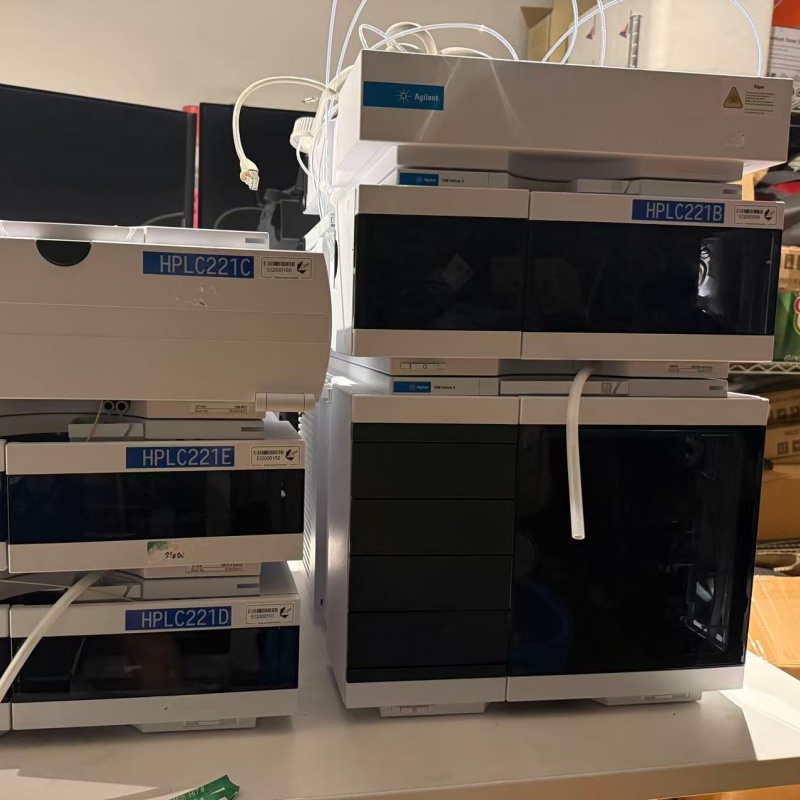
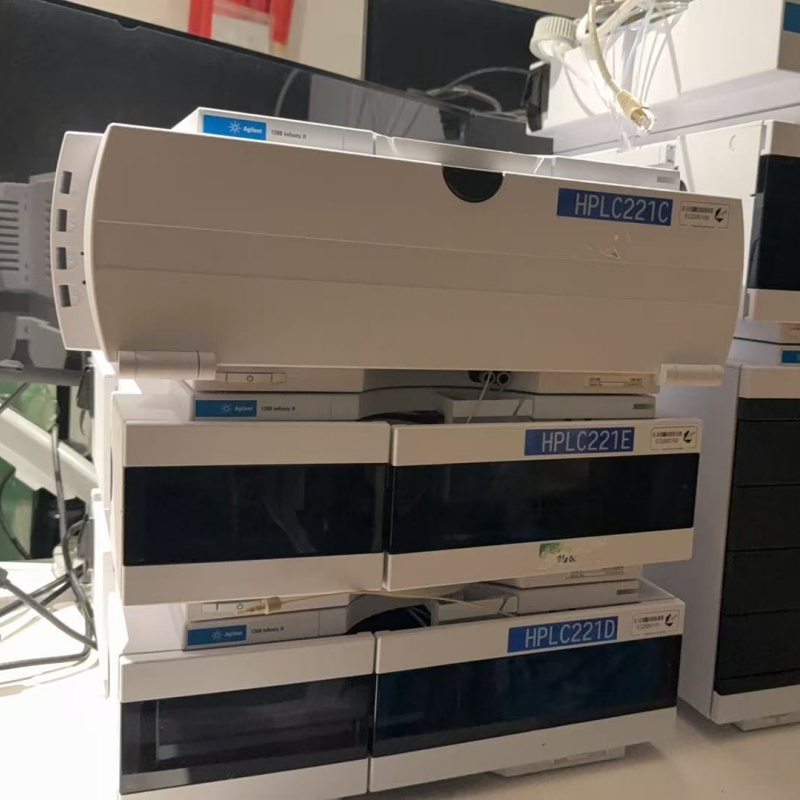
The Agilent 1260 Infinity II Bio-Inert LC System is a high-performance liquid chromatography (HPLC) platform developed by Agilent Technologies for the analysis of biomolecules and other biologically relevant compounds. Designed specifically for biochromatography, this system combines reliable chromatographic performance with a bio-inert sample flow path to help protect sensitive biological samples from unwanted interactions with metal surfaces.
The system is particularly suitable for laboratories working with proteins, monoclonal antibodies, peptides, and other large biomolecules. Its bio-inert design is valuable when analyzing samples under challenging conditions, including high salt concentrations and a wide range of pH values. By minimizing contact between samples and conventional metal surfaces, the system helps reduce unwanted adsorption and supports consistent chromatographic results.
One of the key advantages of the Agilent 1260 Infinity II Bio-Inert LC System is its carefully designed sample flow path. Selected components use materials such as PEEK, ceramics, titanium, and other compatible materials to reduce direct contact between biomolecules and iron-containing or steel surfaces.
This design is especially useful for protein analysis, where interactions with metal surfaces may affect sample recovery, peak shape, or analytical reproducibility. The system's bio-inert configuration can help laboratories maintain sample integrity while working with complex biological materials.
The system also supports challenging mobile-phase conditions, including high-salt buffers and acidic or alkaline solutions, when used within the specified operating limits of the relevant modules and wetted materials. These capabilities make it suitable for applications such as ion-exchange chromatography (IEX), size-exclusion chromatography (SEC), reversed-phase liquid chromatography, and peptide mapping.
The Agilent 1260 Infinity II Bio-Inert Quaternary Pump, model G5654A, is a central component of the system. It supports four-solvent blending, allowing users to develop gradient methods for a variety of analytical applications. The pump is rated for pressures up to 600 bar and features integrated solvent degassing, active seal washing, and a bio-inert solvent delivery path.
Gradient elution enables analysts to separate compounds with different retention characteristics by adjusting mobile-phase composition during a run. This flexibility is important for complex samples, including protein mixtures and peptide preparations.
The pump's compatibility with high-salt mobile phases and extended pH conditions can be beneficial for method development in biological laboratories. Actual solvent compatibility and operating limits should always be verified against the manufacturer's documentation for the specific configuration.
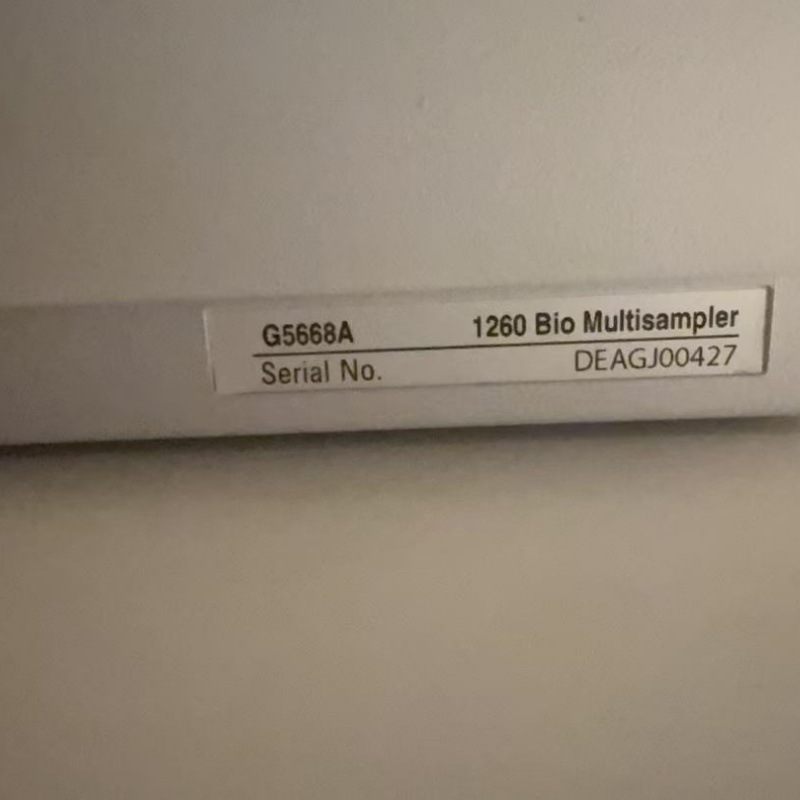
The Agilent 1260 Infinity II Bio-Inert Multisampler, model G5668A, provides automated sample introduction and supports high-capacity microtiter plates and individual sample containers. It is designed for operation at pressures up to 600 bar. Optional Multiwash functionality can help reduce sample carryover, which is particularly important when analyzing samples with a wide range of concentrations.
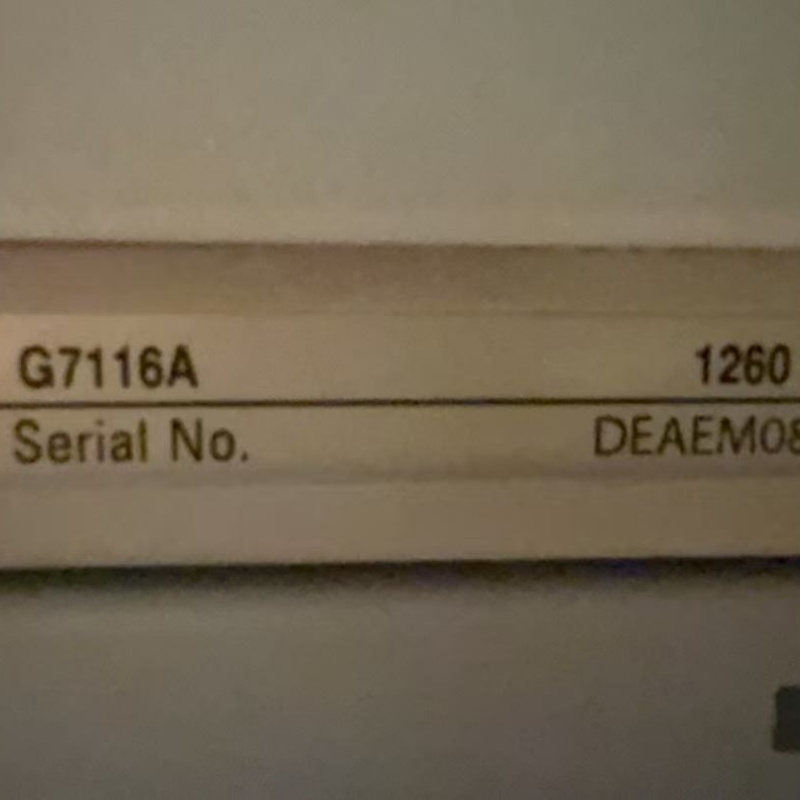
For temperature-sensitive biological samples, an optional sample cooler can be integrated into the multisampler. The system can also be equipped with the Agilent 1260 Infinity II Multicolumn Thermostat, model G7116A, which accommodates up to four columns of up to 30 cm in length. Its specified temperature range is 10°C below ambient temperature to 85°C.
Precise column temperature control helps improve retention-time consistency and method reproducibility, especially during long analytical sequences and method development.
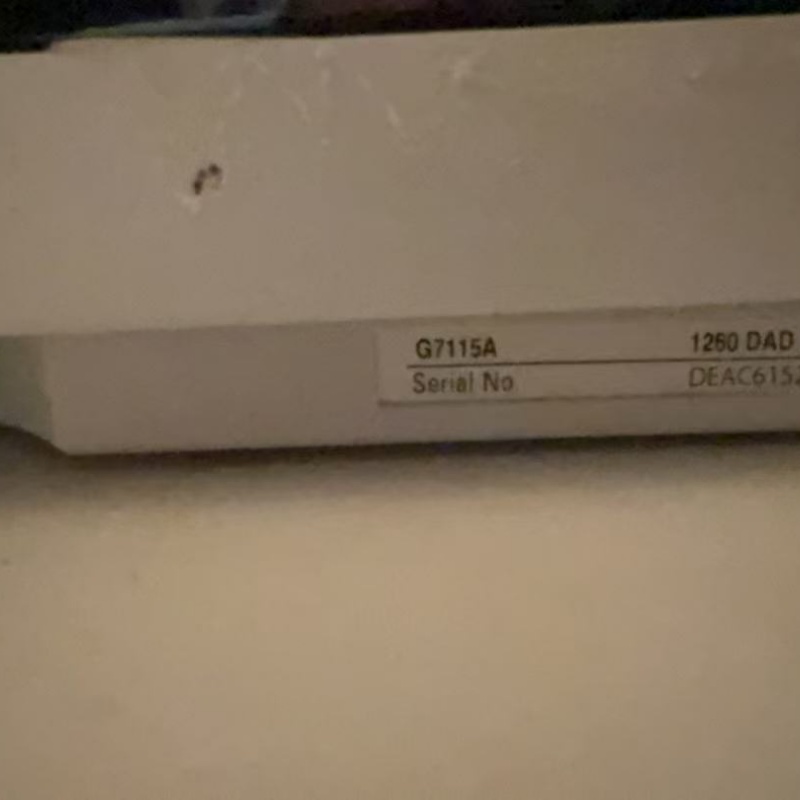
The system can be configured with different detectors according to laboratory requirements. The Agilent 1260 Infinity II Diode Array Detector WR, model G7115A, provides a wavelength range of 190–950 nm and a maximum data acquisition rate of 120 Hz. It is suitable for UV-visible detection of proteins, peptides, and other compounds with appropriate chromophores.
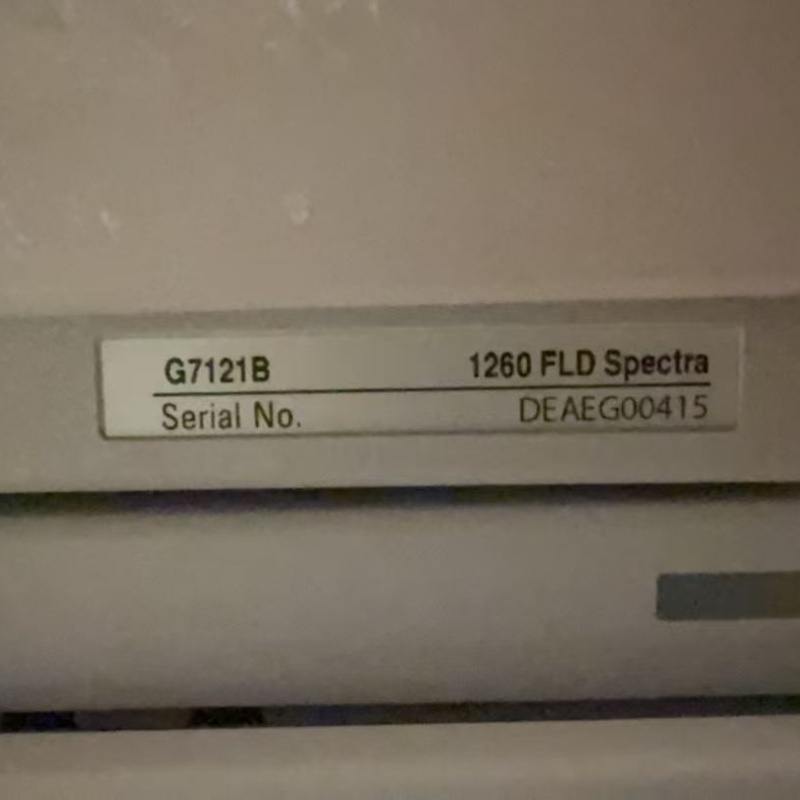
The Agilent 1260 Infinity II Fluorescence Detector Spectra, model G7121B, offers fluorescence detection, including multiwavelength measurements and online acquisition of excitation and emission spectra. A compatible bio-inert flow cell can be selected for applications requiring an inert detection path.
Software and data-system configuration depend on the laboratory's installation and licensing requirements. Agilent's chromatography software and laboratory monitoring tools can support instrument control, sequence management, chromatogram processing, and system diagnostics.
The following table summarizes key specifications for the Agilent 1260 Infinity II Bio-Inert LC System. System-level specifications depend on the selected modules and options.
|
Parameter |
Specification |
|---|---|
|
Manufacturer |
Agilent Technologies |
|
Product name |
Agilent 1260 Infinity II Bio-Inert LC System |
|
Instrument type |
Bio-inert high-performance liquid chromatography system |
|
Pump model |
G5654A |
|
Pump type |
Quaternary solvent pump |
|
Maximum system pressure |
Up to 600 bar |
|
Flow rate range |
0.2–10 mL/min |
|
Number of standard solvents |
Up to 4 |
|
Multisampler model |
G5668A |
|
Injection volume |
Typically 0.1–100 µL |
|
Optional multidraw injection |
Up to 1,000 µL, subject to configuration and a 400 bar pressure limit |
|
Multicolumn thermostat |
G7116A |
|
Column capacity |
Up to 4 columns |
|
Maximum column length |
Up to 30 cm |
|
Column temperature range |
10°C below ambient to 85°C |
|
Diode array detector |
G7115A |
|
DAD wavelength range |
190–950 nm |
|
DAD maximum data rate |
120 Hz |
|
Fluorescence detector option |
G7121B |
|
Bio-inert flow path |
Yes, with compatible bio-inert modules and components |
|
Typical applications |
Protein analysis, mAb analysis, SEC, IEX, peptide mapping |
|
Power supply |
Module-dependent; pump supports 100–240 VAC |
|
Software |
Compatible chromatography software, depending on configuration |
Specifications are based on Agilent documentation and published product information. Optional features, injection limits, detector configurations, and environmental requirements should be verified for the specific instrument.
The Agilent 1260 Infinity II Bio-Inert LC System can support a wide range of bioanalytical workflows:
Protein and monoclonal antibody analysis: Helps characterize sample purity, aggregation, and chromatographic behavior.
Size-exclusion chromatography (SEC): Supports the separation of proteins and other biomolecules according to their hydrodynamic size when paired with an appropriate column.
Ion-exchange chromatography (IEX): Enables charge-based separations using suitable buffers and gradient methods.
Peptide analysis: Supports peptide mapping and related analytical methods with appropriate columns and detection.
Biopharmaceutical research: Provides a flexible LC platform for analytical method development, quality control, and laboratory research.
Method suitability depends on the sample, column chemistry, detector, mobile phase, and validated analytical procedure.
Regular preventive maintenance is essential for reliable operation. Laboratories should inspect solvent lines and fittings for leaks, replace pump seals and filters according to their condition and maintenance schedule, and verify pump performance and detector response periodically.
When working with biological samples, users should follow appropriate flushing procedures to prevent salt precipitation, buffer accumulation, and contamination. Bio-inert components should be maintained with compatible parts; replacing them with conventional metal-containing components may compromise the intended bio-inert flow path.
For laboratories purchasing a used Agilent 1260 Infinity II Bio-Inert LC System, it is advisable to verify the model and serial numbers, inspect the pump and autosampler, confirm detector configuration, review maintenance history, and conduct performance testing before use.
The Agilent 1260 Infinity II Bio-Inert LC System combines flexible solvent delivery, automated sample injection, column temperature control, and configurable detection with a bio-inert flow path designed for sensitive biological samples. Its 600 bar pressure capability and compatibility with a range of biochromatography methods make it a useful platform for pharmaceutical research, biotechnology, and analytical laboratories.
When selecting a system, laboratories should confirm that the pump, sampler, column thermostat, detector, and connecting components match their analytical requirements. A correctly configured and well-maintained system can provide dependable chromatographic performance for routine analysis and method development.
Product Inquiry