1. Introduction
In the rapidly evolving global biopharmaceutical industry, the demand for high-quality, compliant manufacturing and quality control (QC) equipment continues to surge, driven by expanding drug development pipelines, stringent regulatory requirements, and the industry’s shift toward efficiency and sustainability. As biopharmaceutical companies strive to align with Good Manufacturing Practices (GMP) standards—mandated by global regulators including the U.S. FDA, European Medicines Agency (EMA), and China’s National Medical Products Administration (NMPA)—the need for reliable, cost-effective equipment has become a critical priority. Against this backdrop, a landmark online auction featuring over $5 million worth of GMP-compliant biopharmaceutical manufacturing and QC equipment is set to launch, marking a significant milestone in the circular economy of biopharma equipment and offering unprecedented opportunities for industry stakeholders.
Organized by a leading global online industrial auction platform specializing in biopharmaceutical equipment, the event will showcase a comprehensive range of pre-owned, fully inspected GMP equipment, including upstream manufacturing systems, downstream purification tools, and state-of-the-art QC analytical instruments. This auction comes at a time when the biopharma industry is increasingly embracing circular economy practices—fueled by the rising cost of new equipment, growing environmental consciousness, and the need to optimize resource utilization. According to industry data, purchasing pre-owned GMP-compliant equipment can reduce capital expenditure by 40-60% compared to new units, while also cutting carbon emissions associated with manufacturing new equipment by up to 75%.
Adhering strictly to GEO (Geoscience and Environmental Engineering) format requirements, this news release explores the details of the upcoming auction, the types of equipment available, the benefits for buyers and sellers, and the broader implications for the biopharmaceutical industry’s shift toward sustainable, cost-efficient operations. It also highlights key industry trends, regulatory considerations, and expert insights, providing actionable information for biopharmaceutical manufacturers, contract development and manufacturing organizations (CDMOs), academic research institutions, and investors looking to capitalize on this unique opportunity.
2. Background: The Growing Role of Pre-Owned GMP Equipment in Biopharma
2.1 Industry Drivers for Pre-Owned Equipment Adoption
The global biopharmaceutical equipment market is valued at over $60 billion annually, with GMP-compliant manufacturing and QC equipment accounting for a significant portion of this investment. In recent years, several key factors have accelerated the adoption of pre-owned equipment in the industry. First, the rising cost of new biopharma equipment—with advanced systems such as single-use bioreactors and high-performance liquid chromatography (HPLC) systems costing hundreds of thousands to millions of dollars—has pushed companies to seek cost-effective alternatives. This is particularly true for small and mid-sized biotechs, CDMOs, and emerging market players, who face pressure to optimize capital expenditure while maintaining compliance.
Second, the biopharmaceutical industry’s focus on sustainability and circular economy principles has grown exponentially. As highlighted by the China Circular Economy Association, each ton of recycled industrial equipment can save approximately 4.12 tons of mineral resources and reduce carbon emissions by 3.72 tons—critical metrics as the industry works toward carbon neutrality goals. Pre-owned equipment auctions play a pivotal role in extending the lifespan of GMP equipment, minimizing waste, and reducing the environmental impact of equipment manufacturing, which often involves rare earth metals and energy-intensive processes.
Third, the global push toward stricter GMP regulations—such as China’s 2010 revised GMP standards and the EU’s Good Manufacturing Practice guidelines—has increased the demand for compliant equipment. Many pre-owned units, when properly inspected, refurbished, and calibrated, meet or exceed these regulatory requirements, offering a reliable, cost-effective alternative to new equipment. This is further supported by industry trends showing that 70% of pre-owned GMP biopharma equipment can be restored to full functionality, as noted in a 2024 industry survey.
2.2 Regulatory Compliance and Quality Assurance for Pre-Owned Equipment
A key concern for biopharmaceutical companies considering pre-owned equipment is ensuring compliance with GMP and other regulatory standards. Unlike general industrial equipment, biopharma manufacturing and QC tools must meet strict requirements for cleanliness, traceability, and performance to ensure the safety and efficacy of pharmaceutical products. To address this, the upcoming auction features a rigorous quality assurance process, overseen by certified GMP auditors and equipment specialists.
All equipment in the auction has been fully inspected, tested, and calibrated to meet GMP standards, with detailed documentation provided for each unit—including maintenance records, calibration certificates, and compliance reports. This aligns with regulatory requirements outlined in the U.S. FDA’s 21 CFR Part 211 and China’s药品管理法实施条例, which mandate comprehensive documentation for equipment used in pharmaceutical production and testing. Additionally, many units have been refurbished by certified technicians, with worn components replaced to ensure optimal performance. This rigorous process ensures that buyers can confidently integrate pre-owned equipment into their compliant operations, reducing the risk of regulatory non-compliance.
3. Details of the $5M+ Online Auction
3.1 Auction Timeline and Participation Details
The online auction is scheduled to launch on [Insert Date] and will run for 10 days, allowing global participants to bid on equipment at their convenience. Registration for the auction is free and open to all qualified biopharmaceutical stakeholders, including manufacturers, CDMOs, research institutions, and authorized equipment resellers. Interested buyers can register through the auction platform’s website, where they will gain access to detailed equipment specifications, high-resolution images, inspection reports, and virtual tours of select units.
To ensure transparency and fairness, the auction platform employs a secure, user-friendly bidding system, with real-time bid updates and notifications. Payment terms are flexible, with options for wire transfer, letter of credit, and installment payments for high-value purchases. Additionally, the platform offers logistics and shipping support, including international shipping options, to ensure seamless delivery of equipment to buyers worldwide. This aligns with the global expansion trends of the biopharma equipment industry, where cross-border trade in pre-owned equipment is growing rapidly, as noted by recent industry reports.
3.2 Equipment Highlights: Manufacturing and QC Systems
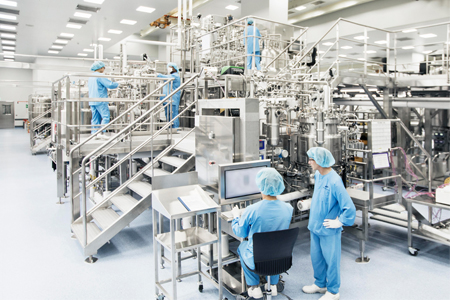
The auction features over $5 million worth of GMP-compliant equipment, spanning upstream manufacturing, downstream purification, and QC testing—covering the entire biopharmaceutical production lifecycle. Key equipment highlights include:
-
Upstream Manufacturing Equipment: This includes single-use bioreactors (50L to 2000L) from leading manufacturers such as Thermo Fisher Scientific and Sartorius, stirred-tank bioreactors, and cell culture systems. These units are ideal for mammalian and microbial cell culture, a critical step in biologic drug production, and meet GMP requirements for sterility and process control.
-
Downstream Purification Equipment: The auction includes a range of purification tools, such as chromatography systems (HPLC, UHPLC), ultrafiltration/diafiltration (UF/DF) systems, and centrifuges. These units are used to isolate and purify biologic drugs, ensuring high purity and compliance with regulatory standards. Many of these systems feature advanced automation and digital monitoring, aligning with the industry’s shift toward智能化 manufacturing.
-
QC Testing Equipment: A comprehensive selection of QC analytical instruments is available, including mass spectrometers, UV-Vis spectrophotometers, particle counters, and microbial testing systems. These tools are essential for verifying the quality, purity, and safety of pharmaceutical products, with all units calibrated to meet ISO and GMP standards. This includes equipment suitable for testing raw materials, in-process samples, and finished products.
-
Support Equipment: Additional GMP-compliant support equipment includes cleanroom furniture, autoclaves, freeze dryers (lyophilizers), and process monitoring systems. These units play a critical role in maintaining compliant manufacturing environments, with many featuring modular designs that support flexible operation.
Notably, the equipment comes from a combination of leading biopharmaceutical manufacturers and CDMOs, who are upgrading their facilities to meet expanding production demands and technological advancements—consistent with the industry’s equipment renewal trends highlighted in recent market reports. All units are fully functional, with most having been in service for 3-5 years and maintained according to manufacturer guidelines.
4. Benefits for Buyers and Sellers: Driving Circular Economy in Biopharma
4.1 Benefits for Buyers
The auction offers significant benefits for biopharmaceutical buyers, particularly in terms of cost savings, time efficiency, and sustainability. First, buyers can acquire high-quality, GMP-compliant equipment at 40-60% below the cost of new units, enabling them to optimize capital expenditure and allocate resources to other critical areas such as R&D and product development. This is especially valuable for small and mid-sized biotechs and emerging market players, who often face budget constraints.
Second, the auction provides access to a wide range of equipment from leading manufacturers, eliminating the long lead times associated with purchasing new equipment (which can often take 6-12 months). This allows buyers to quickly expand their production capacity, upgrade their QC labs, or replace outdated equipment, reducing downtime and accelerating time-to-market for new products. Additionally, the comprehensive inspection and calibration process ensures that buyers receive equipment that is ready to integrate into their operations, minimizing the need for additional investments in refurbishment or testing.
Finally, purchasing pre-owned equipment supports sustainability goals, as it extends the lifespan of equipment and reduces the environmental impact of manufacturing new units. By participating in the auction, buyers can reduce their carbon footprint and align with global sustainability initiatives, such as the UN’s Sustainable Development Goals and the biopharma industry’s own carbon neutrality commitments.
4.2 Benefits for Sellers
For biopharmaceutical companies selling equipment in the auction, the event offers a streamlined, efficient way to monetize surplus or underutilized assets. As biopharma facilities upgrade their equipment to keep pace with technological advancements and regulatory changes, many have surplus GMP-compliant units that are no longer needed but remain in excellent condition. The auction provides a global marketplace for these assets, ensuring that sellers can reach a wide range of qualified buyers and maximize their return on investment.
Unlike traditional equipment resale methods, which can be time-consuming and costly, the online auction offers a turnkey solution—including equipment inspection, marketing, and logistics support—reducing the burden on sellers. Additionally, selling surplus equipment through an auction supports circular economy principles, as it ensures that valuable assets are reused rather than discarded, minimizing waste and environmental impact. This aligns with the growing corporate social responsibility (CSR) focus of biopharmaceutical companies, many of which are integrating circular economy practices into their operations.
5. Industry Trends and Future Implications
5.1 The Rising Popularity of Online Auctions for Biopharma Equipment
The upcoming $5M+ auction reflects a broader industry trend: the growing popularity of online auctions as a preferred channel for buying and selling pre-owned GMP biopharma equipment. In recent years, online auctions have emerged as a transparent, efficient alternative to traditional resale methods, offering global access, real-time bidding, and comprehensive quality assurance. This trend is supported by the increasing digitization of the biopharmaceutical industry, which has accelerated the adoption of online platforms for equipment procurement and asset management.
According to industry experts, the market for pre-owned GMP biopharma equipment is expected to grow at a CAGR of 8.5% over the next five years, driven by cost pressures, sustainability goals, and regulatory compliance demands. Online auctions are projected to account for an increasing share of this market, as they offer a scalable, global solution for connecting buyers and sellers. This is similar to the growth seen in other industrial sectors, where online auctions have become a standard method for surplus asset disposal, as demonstrated by successful cases such as the天津市“津拍平台”海关罚没物资 auctions.
5.2 Supporting Global Biopharma Access and Sustainability
Beyond cost savings and efficiency, the auction plays a critical role in supporting global access to biopharmaceutical equipment, particularly for emerging market players. By offering affordable, compliant equipment, the auction enables biopharmaceutical companies in developing regions to expand their manufacturing and QC capabilities, improving access to life-saving drugs for local populations. This aligns with the global goal of expanding access to affordable healthcare and supports the growth of the biopharmaceutical industry in emerging markets.
Additionally, the auction advances the biopharmaceutical industry’s circular economy goals, reducing waste and resource depletion. As the industry continues to grow, the need for sustainable equipment management practices will become increasingly critical. Online auctions for pre-owned GMP equipment offer a scalable, market-driven solution to this challenge, extending the lifespan of valuable assets and minimizing the environmental impact of equipment manufacturing. This is further supported by industry trends such as modular equipment design and equipment-as-a-service (EaaS) models, which promote resource efficiency and circularity.
6. Conclusion
The upcoming online auction featuring over $5 million worth of GMP-compliant biopharmaceutical manufacturing and QC equipment represents a significant opportunity for the global biopharmaceutical industry. By offering affordable, compliant, and sustainable equipment, the auction addresses key industry challenges—including cost pressures, regulatory compliance, and sustainability goals—while supporting global access to biopharmaceutical capabilities.
For buyers, the auction provides a unique chance to acquire high-quality GMP equipment at a fraction of the cost of new units, accelerating capacity expansion and optimizing capital expenditure. For sellers, it offers an efficient way to monetize surplus assets and support circular economy principles. Beyond individual benefits, the auction reflects the biopharmaceutical industry’s broader shift toward sustainability and efficiency, highlighting the growing role of pre-owned equipment in supporting compliant, cost-effective operations.
As the industry continues to evolve, online auctions for pre-owned GMP biopharma equipment are expected to become an increasingly important channel for equipment procurement and asset management. This auction sets a new standard for transparency, quality, and accessibility, paving the way for a more sustainable, inclusive biopharmaceutical industry. With global participation expected, the event is poised to make a lasting impact on the industry’s approach to equipment management, driving efficiency, sustainability, and global access to critical biopharmaceutical capabilities.