Consultation Hotline
+1 (302) 618-8777
+1 (302) 618-8777
Current location:Home > Blogs > Industry News
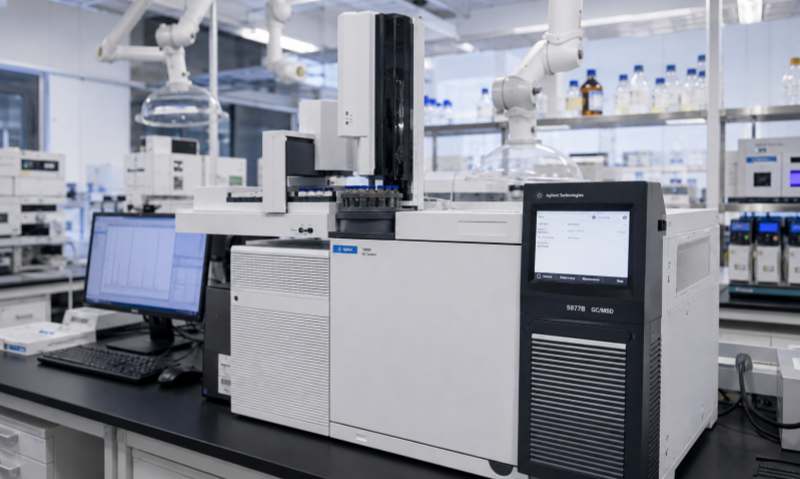
SANTA CLARA, California — October 2026 — Agilent Technologies is advancing its strategy in digital diagnostics, laboratory automation, and biopharmaceutical manufacturing through a series of developments announced in October. The company has announced a proposed acquisition of Proscia, a digital pathology software provider, for $240 million in cash, with additional contingent payments of up to $30 million. The planned transaction is intended to strengthen Agilent's capabilities in artificial intelligence (AI)-enabled digital pathology and digital diagnostics.
The proposed acquisition forms part of a broader effort to connect analytical instruments, laboratory software, automation technologies, and digital workflows. In addition to the Proscia announcement, Agilent highlighted the NovoStation sample preparation system on October 1, designed to support automated workflows for flow cytometry analysis. On October 5, the company also announced an expansion of its oligonucleotide manufacturing capabilities.
Together, these developments illustrate Agilent's focus on helping laboratories improve productivity, integrate scientific data, and support increasingly complex applications in pharmaceutical research, biotechnology, clinical diagnostics, and life sciences manufacturing.
The proposed acquisition of Proscia represents a significant step in Agilent's expansion into AI-enabled pathology and digital diagnostics. Proscia develops software that helps laboratories digitize, manage, and analyze pathology images, supporting more efficient review of tissue samples and associated diagnostic information.
Traditional pathology workflows rely heavily on physical glass slides and optical microscopy. Although these methods remain essential, digital pathology allows tissue images to be scanned, stored, shared, and reviewed electronically. Digital systems can help pathologists collaborate across locations, organize large image collections, and integrate image-based findings with other clinical or research data.
AI can further enhance these workflows by assisting with image analysis, identifying patterns, and supporting quantitative assessment. Such capabilities may help laboratories improve consistency and manage growing volumes of diagnostic information.
Under the announced proposal, Agilent would pay $240 million in cash, with additional contingent payments of up to $30 million. The final transaction terms, closing conditions, and timing remain subject to the applicable acquisition process and official company disclosures.
The proposed combination could provide Agilent with additional software capabilities that complement its established analytical technologies and laboratory solutions. However, the ultimate benefits will depend on integration, customer adoption, regulatory considerations, and the practical performance of the combined offerings.
On October 1, Agilent announced the NovoStation sample preparation system, designed to support automated workflows for flow cytometry analysis.
Flow cytometry is widely used in immunology, cell biology, pharmaceutical research, clinical laboratories, and biotechnology development. The technique measures characteristics of individual cells or particles as they pass through a detection system, enabling researchers to examine cell populations and assess biological markers.
Sample preparation is a critical stage in flow cytometry. Inconsistent preparation can affect measurement quality, reproducibility, and the comparability of results. Manual procedures may also require considerable technician time, particularly when laboratories process large sample batches.
Automated sample preparation can help standardize repetitive steps, reduce manual handling, and improve workflow consistency. Depending on the configuration and validated procedure, automation may also support better sample traceability and more efficient laboratory scheduling.
For laboratories adopting automated systems, important evaluation criteria include compatibility with existing analytical instruments, sample throughput, method flexibility, cleaning requirements, software integration, and ease of routine maintenance.
The NovoStation announcement reflects the broader movement toward reducing manual bottlenecks and integrating sample preparation more closely with downstream analysis.
On October 5, Agilent announced an expansion of its oligonucleotide manufacturing capabilities, reinforcing its presence in an important area of modern biotechnology.
Oligonucleotides are short sequences of nucleic acids used in applications such as molecular diagnostics, genetic research, and the development of certain therapeutic products. Their importance has grown alongside advances in nucleic acid-based medicines and precision biotechnology.
Manufacturing these molecules requires careful control of synthesis, purification, analytical testing, and quality assessment. As development programs advance, manufacturers must maintain consistent product quality while managing production capacity and increasingly demanding analytical requirements.
Expanding manufacturing capabilities can help support customer demand and provide additional resources for the development and production of specialized biological products.
Analytical technologies play an essential role throughout this process. Chromatography, mass spectrometry, and other characterization techniques can help assess product identity, purity, impurities, and consistency. Reliable analytical methods are therefore important for both research and manufacturing quality control.
Agilent's continued investment in this area highlights the relationship between analytical science and the growing market for advanced therapeutic technologies.
Taken together, the three developments indicate that Agilent is pursuing opportunities across several interconnected segments of the life sciences market.
The proposed Proscia acquisition would strengthen its digital pathology and software capabilities. NovoStation addresses laboratory automation and sample preparation, while the oligonucleotide expansion supports the infrastructure required for advanced biotechnology manufacturing.
These areas share a common objective: improving the efficiency, consistency, and integration of scientific workflows.
For laboratories, this trend means that equipment selection increasingly involves more than instrument specifications alone. Software compatibility, automated sample handling, data management, service support, and total cost of ownership are becoming important factors in long-term procurement decisions.
Agilent's October announcements also have implications for the wider analytical instrument market. As manufacturers expand their digital and automation capabilities, laboratories may increasingly evaluate integrated solutions rather than purchasing individual instruments in isolation.
Established technologies such as high-performance liquid chromatography, gas chromatography, mass spectrometry, and inductively coupled plasma mass spectrometry will remain important in analytical laboratories. At the same time, demand for digital pathology, automated sample preparation, and specialized biotechnology manufacturing solutions may create additional opportunities for instrument suppliers and service providers.
For laboratories operating existing Agilent equipment, preventive maintenance, instrument qualification, software compatibility, and technician training remain essential to maintaining reliable performance.
Pre-owned and refurbished instruments may also be relevant to organizations seeking to expand analytical capacity within limited budgets. Buyers should carefully evaluate equipment condition, maintenance history, software licensing, replacement-part availability, and post-installation support before purchasing.
Agilent Technologies' proposed acquisition of Proscia, the introduction of the NovoStation sample preparation system, and the expansion of oligonucleotide manufacturing capabilities highlight the company's continued investment in digital diagnostics, laboratory automation, and advanced biotechnology.
Although the three developments address different markets, they reflect a shared direction toward more integrated scientific workflows. By combining analytical expertise with software, automation, and manufacturing capabilities, Agilent aims to support laboratories throughout the research, development, and production process.
The long-term impact will depend on successful integration, product adoption, and measurable improvements in laboratory productivity and analytical quality. For the broader scientific instrument industry, these developments reinforce the growing importance of digital technology and workflow integration alongside traditional instrument performance.
Editorial note: Before publication, verify the acquisition terms, transaction status, and exact product and manufacturing announcements against Agilent Technologies' official news releases. The Proscia transaction should be described as proposed unless Agilent confirms that it has closed.