
Consultation Hotline
+1 (302) 618-8777
+1 (302) 618-8777
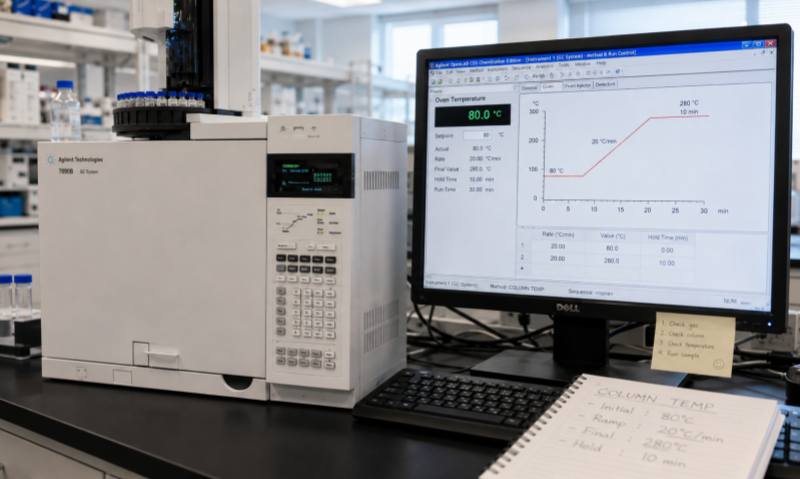
Optical emission spectrometers (OES) are widely used in metallurgy, steel manufacturing, automotive industries, aerospace, and material analysis for rapid determination of elemental composition. During long-term operation, problems such as poor exhaust performance, abnormal temperature increase, and unstable phosphorus (P) and sulfur (S) analysis results may occur. These faults can directly affect measurement accuracy and instrument reliability. Understanding the causes and solutions of these common problems is essential for efficient instrument maintenance.
The exhaust system of an optical emission spectrometer plays an important role in removing plasma gases, combustion products, and metal oxides generated during analysis. Poor exhaust performance may cause contamination inside the optical system and unstable analytical results.
Common symptoms:
Weak exhaust airflow
Smoke or gas accumulation around the spark stand
Increased background signal
Unstable measurement results
Possible causes:
Blocked exhaust pipe
Dust accumulation in the exhaust filter
Insufficient fan speed
Damaged exhaust motor
Improper installation of exhaust duct
Solutions:
First, check whether the exhaust pipe is blocked by dust or metal particles. Clean or replace the exhaust filter regularly to maintain smooth airflow. Inspect the exhaust fan operation and confirm whether the motor speed is normal.
The exhaust duct should be installed with minimal bends to reduce airflow resistance. If abnormal noise or vibration occurs in the fan, the exhaust motor or bearings may require inspection and replacement.
Temperature control is critical for maintaining stable optical and electronic performance. Excessive temperature inside the instrument may affect the excitation source, optical chamber, and electronic components.
Common causes:
Poor ventilation around the instrument
Cooling fan failure
Blocked air inlet or outlet
High ambient temperature
Cooling system malfunction
Troubleshooting methods:
Check whether the ventilation openings are blocked by dust or other objects. Ensure that sufficient space is maintained around the instrument for heat dissipation. Clean cooling fans and air filters regularly.
If the internal temperature remains high, check the operation of cooling fans and temperature sensors. For instruments equipped with water cooling systems, verify coolant flow, water level, and temperature control performance.
Long-term operation under high-temperature conditions may accelerate component aging, so temperature alarms should be investigated immediately.
Phosphorus and sulfur are important elements in metal analysis, but their measurement stability is often more sensitive than other elements because their characteristic spectral lines are located in the ultraviolet region and are easily affected by environmental conditions.
Possible causes:
Dirty optical system
Incorrect instrument calibration
Unstable excitation source
Sample surface contamination
Argon gas purity problems
Solutions:
Regularly clean the spark stand and optical window to prevent dust or metal residues from affecting ultraviolet transmission. Ensure that samples have a clean, flat, and properly prepared surface before analysis.
Check the calibration status of the instrument and perform standard sample verification regularly. If P and S results fluctuate significantly, inspect the excitation source stability and confirm that the argon gas purity meets instrument requirements.
The argon gas pathway should also be checked for leaks or unstable flow. Replace gas filters and seals according to maintenance schedules.
To ensure reliable operation of an optical emission spectrometer, users should establish a regular maintenance program. Key maintenance tasks include cleaning the spark chamber, checking exhaust performance, inspecting cooling systems, verifying gas supply stability, and performing routine calibration.
Operators should keep detailed records of instrument alarms, maintenance activities, and analysis performance. Early detection of abnormal conditions can prevent major failures and reduce downtime.
Exhaust problems, high-temperature alarms, and unstable P/S analysis are common issues in optical emission spectrometers. Effective troubleshooting requires systematic inspection of mechanical systems, cooling components, gas supply, optical paths, and calibration conditions. Through proper operation and preventive maintenance, laboratories can improve instrument stability, extend equipment lifespan, and ensure accurate elemental analysis results.