Consultation Hotline
+1 (302) 618-8777
+1 (302) 618-8777
Current location:Home > Blogs > Industry News
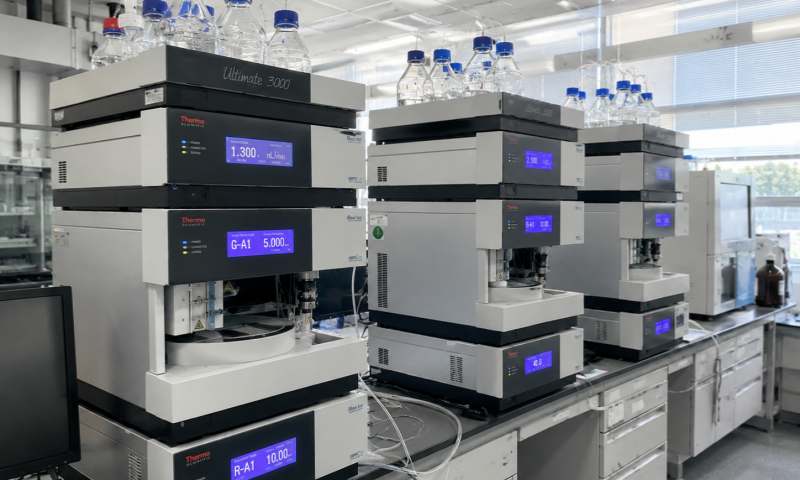
WALTHAM, Massachusetts — October 2026 — Thermo Fisher Scientific, a global leader in scientific instruments, laboratory services, analytical technologies, and life sciences solutions, has reported strong financial performance for the third quarter of 2026. The company announced revenue of $12.14 billion, representing a 9% increase compared with the same period last year. Adjusted earnings per share reached $6.68, up 15% year over year, reflecting continued demand for advanced scientific technologies and the company's focus on operational performance.
The latest results highlight Thermo Fisher's position in the global laboratory equipment market, where technological innovation, productivity improvements, and investment in scientific research continue to influence purchasing decisions. The company is also advancing its portfolio of mass spectrometry and proteomics technologies to support applications in pharmaceutical development, clinical research, biotechnology, and analytical laboratories.
Thermo Fisher's third-quarter revenue of $12.14 billion demonstrates continued business activity across its diversified portfolio. The 9% year-over-year increase reflects the company's broad presence in analytical instruments, laboratory products, biopharmaceutical services, and specialized scientific solutions.
Adjusted earnings per share increased by 15% to $6.68, exceeding the revenue growth rate. Earnings performance can be influenced by several factors, including product mix, operating efficiency, cost management, and share count. The results indicate that the company continued to generate strong adjusted earnings while serving customers across multiple scientific markets.
Thermo Fisher's diversified business model allows it to serve pharmaceutical companies, universities, government laboratories, hospitals, biotechnology developers, and industrial testing facilities. Demand in these markets can vary according to research funding, pharmaceutical development pipelines, capital expenditure budgets, and regulatory requirements.
For laboratory customers, the company's financial performance is relevant because sustained investment in research and product development can support the introduction of new instruments, software platforms, consumables, and technical services.
Mass spectrometry remains an important component of Thermo Fisher's scientific instrument portfolio. These technologies enable researchers to identify and quantify chemical compounds, characterize complex biological samples, investigate molecular structures, and study changes in biological systems.
One development highlighted in the company's recent activities is the Orbitrap Isora isotope ratio mass spectrometer. Isotope ratio analysis provides information about the relative abundance of different isotopes within a sample. Such measurements can help researchers investigate biological processes, trace the origins of materials, and study complex chemical and environmental systems.
The introduction of specialized mass spectrometry technologies reflects the continuing demand for greater analytical precision and improved capabilities in research laboratories.
Modern mass spectrometry systems increasingly combine advanced ion detection, sophisticated data processing, automated workflows, and specialized analytical software. These capabilities can help laboratories process complex samples more efficiently and generate data suitable for demanding research applications.
For laboratories considering new mass spectrometry equipment, instrument selection requires careful evaluation of analytical performance, sample throughput, operating costs, service availability, and compatibility with existing laboratory workflows.
Thermo Fisher has also highlighted collaboration with Mayo Clinic in proteomics research. Proteomics involves the large-scale study of proteins, including their abundance, structure, interactions, and biological functions.
Proteomics technologies have become increasingly important in biomedical research because proteins are closely associated with cellular activity, disease mechanisms, and responses to treatment. Advanced analytical platforms can help researchers examine thousands of proteins and investigate complex biological pathways.
Collaborations between scientific instrument manufacturers and major research institutions can help demonstrate how analytical technologies perform in real-world research environments. They can also support the development of improved workflows for sample preparation, measurement, data analysis, and interpretation.
For pharmaceutical and biotechnology companies, these capabilities may contribute to biomarker discovery, drug development, translational research, and investigations into disease biology.
As proteomics studies become more complex, laboratories increasingly need integrated solutions that combine reliable instruments, high-quality consumables, validated methods, and efficient data management.
Thermo Fisher's third-quarter performance provides useful context for the broader laboratory instrument industry. Demand for advanced analytical technologies remains closely connected to scientific research, biopharmaceutical innovation, clinical testing, and industrial quality control.
At the same time, laboratories must balance analytical performance against capital budgets and long-term operating expenses. Purchasing decisions often involve comparing new instruments with refurbished or pre-owned systems that can meet established analytical requirements at a lower initial cost.
The secondary laboratory instrument market may therefore remain relevant to research organizations seeking to expand analytical capacity while controlling expenditure. Pre-owned HPLC systems, gas chromatographs, mass spectrometers, and other laboratory instruments can offer practical alternatives when their condition, configuration, service history, and performance have been properly evaluated.
Professional maintenance is particularly important for sophisticated analytical equipment. Mass spectrometers may require regular inspection of vacuum systems, ion sources, pumps, calibration procedures, and software configurations. Chromatography systems also depend on stable flow delivery, effective sample introduction, leak-free connections, and appropriate preventive maintenance.
Laboratories evaluating refurbished equipment should verify instrument history, availability of compatible parts, software licensing, installation requirements, and the scope of any warranty or service agreement.
Thermo Fisher's third-quarter results reinforce the importance of scientific innovation and operational efficiency in the analytical instrument sector. Revenue growth of 9% and adjusted earnings-per-share growth of 15% provide a positive snapshot of the company's performance during the period.
The continued development of specialized mass spectrometry systems and proteomics research capabilities also illustrates how instrument manufacturers are responding to increasingly complex scientific questions.
Looking ahead, laboratories will likely continue to evaluate technologies according to analytical performance, automation potential, data quality, reliability, and total cost of ownership. Instrument manufacturers, service providers, and laboratory equipment suppliers will all play important roles in helping customers maintain productivity and meet evolving research requirements.
For Thermo Fisher Scientific, combining advanced analytical technologies with laboratory services and scientific collaboration remains an important part of its market strategy.
About Thermo Fisher Scientific
Thermo Fisher Scientific is a global supplier of scientific instruments, analytical technologies, laboratory products, specialty diagnostics, and services for the life sciences industry. Its solutions support pharmaceutical and biotechnology research, clinical laboratories, academic institutions, industrial testing, and environmental analysis worldwide.
Editorial note: The financial figures and product developments in this article are based on the information provided for this news release. Before publication, verify the reported third-quarter figures, Orbitrap Isora announcement, and Mayo Clinic collaboration against Thermo Fisher Scientific's official investor relations materials and press releases.