Consultation Hotline
+1 (302) 618-8777
+1 (302) 618-8777
Current location:Home > Blogs > Industry News
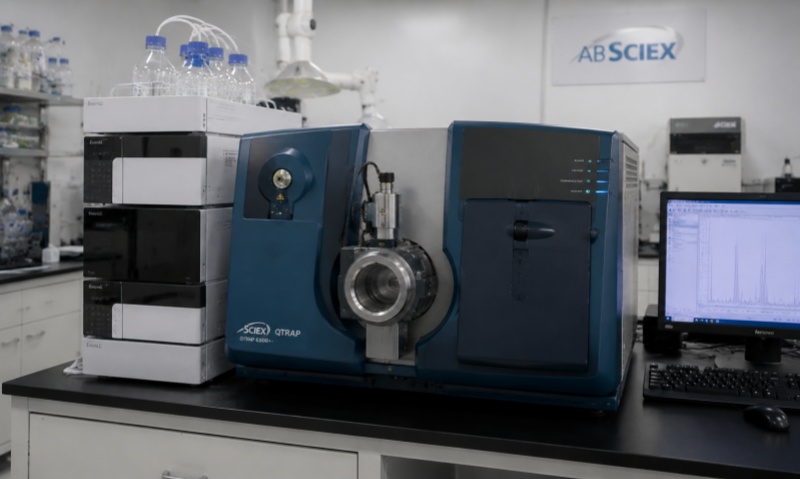
October 2026 — SCIEX continues to strengthen its position in analytical science with developments in capillary electrophoresis, mass spectrometry, and laboratory software. The company's recent activities highlight its commitment to helping pharmaceutical and biotechnology laboratories improve analytical workflows, accelerate research decisions, and address the growing complexity of emerging therapies.
Among the developments attracting attention is the expansion of capabilities associated with the BioPhase 8800 Multi-Capillary Electrophoresis System. Designed for high-throughput biopharmaceutical analysis, the platform supports laboratories investigating complex biological molecules and evaluating product quality during drug development. SCIEX has also highlighted its novus V55 system, SCIEX OS 5.0 software, and continued development of the ZenoTOF mass spectrometry portfolio.
Together, these technologies illustrate an industry-wide shift toward integrated analytical workflows that combine advanced instrumentation, automated data processing, and more efficient laboratory operations.
The BioPhase 8800 Multi-Capillary Electrophoresis System is designed to help laboratories perform multiple capillary electrophoresis analyses in parallel. By increasing analytical throughput, this approach can reduce the time required to process sample batches and generate data for research and quality assessment.
Capillary electrophoresis is an important analytical technique for characterizing biological molecules according to properties such as size and charge. In biopharmaceutical development, these measurements can support the evaluation of protein purity, molecular heterogeneity, and other quality attributes.
As therapeutic modalities become more diverse, analytical laboratories face increasing pressure to generate reliable data within shorter development timelines. Monoclonal antibodies, recombinant proteins, antibody-drug conjugates, and other complex biological products can require specialized analytical methods to assess their characteristics throughout development and manufacturing.
Multi-capillary systems can help address these demands by processing samples in parallel, improving laboratory productivity when appropriate methods and validated procedures are available.
For pharmaceutical developers, higher throughput is only one part of the equation. Data consistency, method robustness, instrument reliability, and compliance with applicable quality requirements remain essential considerations when selecting analytical platforms.
The expansion of analytical capabilities is particularly relevant as pharmaceutical companies invest in new therapeutic approaches. Biologics and other advanced therapies often require more sophisticated characterization than conventional small-molecule drugs.
Analytical techniques such as capillary electrophoresis and mass spectrometry provide complementary information. Capillary electrophoresis can help assess molecular size or charge-related characteristics, while mass spectrometry can provide detailed information about molecular mass, structural features, and molecular composition.
Using complementary technologies allows researchers to investigate different aspects of a sample rather than relying on a single analytical method.
For example, laboratories developing protein-based therapeutics may use electrophoretic methods to evaluate product purity and charge variants, while mass spectrometry can help characterize molecular structures and investigate modifications.
The combination of reliable instruments, appropriate analytical methods, and effective data management can help researchers identify potential quality issues earlier and make better-informed development decisions.
SCIEX has also highlighted the novus V55 system as part of its broader analytical technology portfolio. Instrument selection should always be based on the specific capabilities, intended applications, and validated performance of the relevant configuration.
More broadly, the demand for advanced analytical instruments continues to grow in pharmaceutical research, clinical research, environmental testing, and industrial laboratories. Researchers increasingly need platforms that provide reliable measurements while supporting efficient sample handling and streamlined data review.
Mass spectrometry remains central to many of these applications. Its ability to identify and quantify compounds at low concentrations makes it valuable for drug discovery, biomarker research, metabolomics, proteomics, and characterization of complex biological samples.
For laboratories evaluating new platforms, important considerations include analytical sensitivity, selectivity, sample throughput, software compatibility, maintenance requirements, and the availability of technical support.
Alongside instrument development, SCIEX continues to emphasize the role of software in modern laboratory workflows. SCIEX OS is an analytical software environment used to support data acquisition, processing, review, and reporting for compatible SCIEX mass spectrometry systems.
Software is increasingly important because modern analytical instruments generate large volumes of complex data. Laboratories need efficient ways to review chromatograms, evaluate peak integration, compare results, identify potential errors, and maintain traceable analytical records.
A well-integrated software workflow can help reduce repetitive manual tasks and support more consistent data processing. However, software capabilities, supported instrument configurations, and regulatory suitability must be confirmed for each laboratory's specific application.
For regulated pharmaceutical laboratories, implementation also requires appropriate user training, access controls, documented procedures, data integrity practices, and validation where applicable.
SCIEX's ZenoTOF portfolio represents another important area of its mass spectrometry development. Time-of-flight mass spectrometry combines rapid data acquisition with accurate mass measurement, supporting applications that require detailed molecular characterization.
Advanced mass spectrometry technologies are increasingly used in proteomics, pharmaceutical research, biomarker discovery, and analysis of complex mixtures. Researchers may use these systems to investigate molecular composition, identify compounds, and study low-abundance analytes in challenging sample matrices.
The practical value of any platform depends on the analytical method, sample characteristics, instrument configuration, and data-processing strategy. Laboratories should assess performance using representative samples and validated workflows before adopting a new technology for routine testing.
These developments have implications beyond new instrument sales. As laboratories adopt increasingly sophisticated analytical platforms, installation, preventive maintenance, technical training, and application support become important parts of total ownership cost.
For laboratories operating existing SCIEX instruments, maintaining stable performance requires attention to instrument cleanliness, vacuum-system condition where applicable, calibration, sample introduction, software compatibility, and scheduled maintenance.
Pre-owned mass spectrometry systems may also provide a cost-effective option for laboratories with limited capital budgets. Before purchasing refurbished equipment, buyers should verify the instrument's service history, configuration, operating condition, software licensing, availability of replacement parts, and post-installation support.
Professional installation and performance verification are particularly important when moving instruments between facilities or integrating them into a new laboratory environment.
SCIEX's developments in BioPhase 8800 multi-capillary electrophoresis, analytical software, and mass spectrometry reflect the growing need for productive and integrated laboratory workflows.
As biopharmaceutical research advances, laboratories will continue to seek analytical solutions that combine throughput, reliable measurements, effective data processing, and dependable technical support. By developing complementary analytical technologies, SCIEX is addressing important requirements across drug development, molecular characterization, and quality assessment.
For research organizations and analytical laboratories, the key is to select technologies that match their scientific objectives while maintaining appropriate standards for data quality, instrument reliability, and long-term operational efficiency.
Editorial note: Before publication, confirm the exact announcement dates, the scope of the BioPhase 8800 capability expansion, and the specifications and availability of novus V55 and SCIEX OS 5.0 using official SCIEX materials. This article describes the broader analytical context and does not imply that every discussed feature is available on every instrument configuration.