
Consultation Hotline
+1 (302) 618-8777
+1 (302) 618-8777
Current location:Home > Product > spectrometer > UV-Vis
PRODUCT CATEGORY
Related Articles
Detailed Introduction
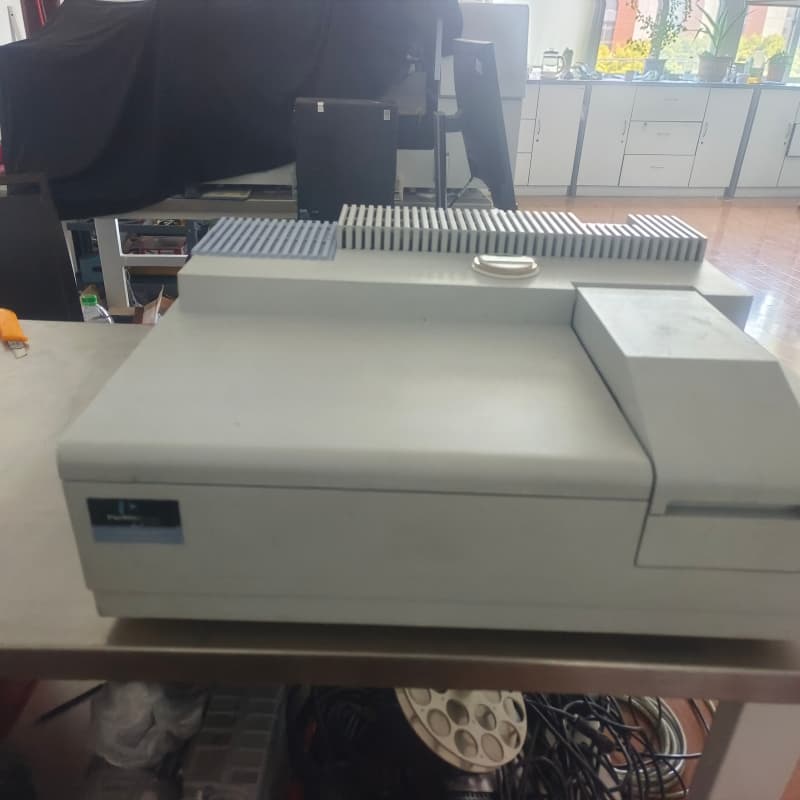
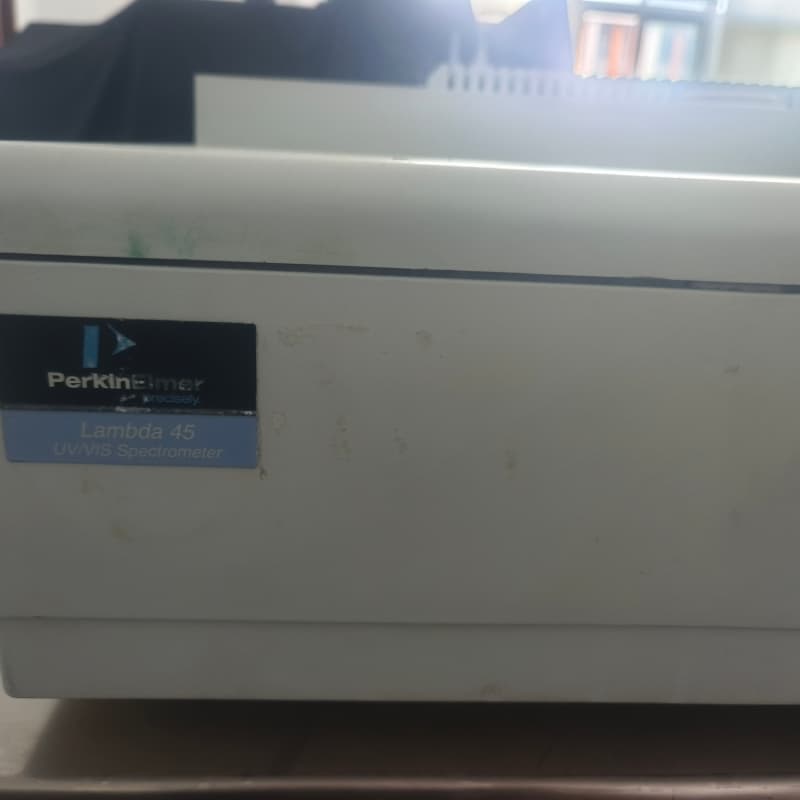
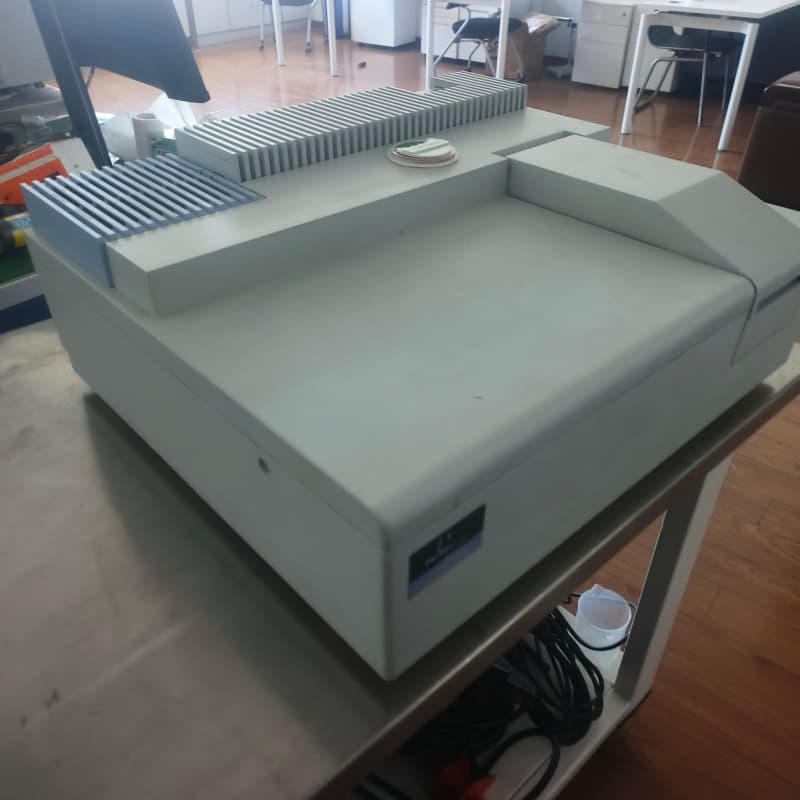
The PerkinElmer Lambda 450 UV/Vis Spectrophotometer stands as a highly reliable and precise analytical instrument, widely recognized in laboratories for its robust performance in ultraviolet and visible light absorption measurements. As a distinguished member of the renowned Lambda series, this double-beam, dual-monochromator system is engineered to deliver exceptional optical stability, accuracy, and a remarkably flat baseline, making it an ideal workhorse for both routine quality control and complex research applications. The fundamental design of the Lambda 450 incorporates a sophisticated optical layout where light from a combined deuterium (UV) and tungsten-halogen (Visible/NIR) source is split into a sample beam and a reference beam. This double-beam architecture is crucial as it continuously compares the light passing through the sample against the reference, effectively compensating for any fluctuations in lamp intensity, electronic drift, or atmospheric changes in real-time. This ensures superior long-term stability and measurement precision, which are critical for time-driven experiments such as kinetics or dissolution testing. A standout feature of the Lambda 450 is its inclusion of a pre-monochromator (front monochromator) in addition to the primary monochromator. This dual-monochromator design is specifically implemented to achieve an extremely low stray light specification (typically <0.005%T at 220 nm using NaI), which is paramount for maintaining true linearity in absorbance readings at high concentrations (up to Abs 3.0 or higher) and for accurately measuring samples with sharp absorption bands or high optical density. The monochromators utilize high-quality holographic gratings to disperse light, and the spectral bandwidth is adjustable, allowing users to select between 0.5, 1, 2, or 4 nm to optimize resolution and signal-to-noise ratio based on the specific analytical task. Covering a broad wavelength range from 190 nm to 1100 nm, the instrument seamlessly transitions from the deep ultraviolet region, essential for analyzing conjugated organic molecules, nucleic acids, and proteins, to the visible and near-infrared regions, used for colorimetric assays, inorganic ion analysis, and material reflectance/transmittance studies.
The detector system in the Lambda 450 is another key highlight, utilizing a stable, long-life, wide-range Solid State Detector (SCD) rather than traditional photomultiplier tubes (PMTs) which typically have a limited range up to 900 nm. The SCD in the Lambda 450 provides consistent, high-sensitivity performance across the entire 190-1100 nm range, ensuring reliable data collection from the UV through the NIR without the need for detector switching. This contributes to the instrument's excellent photometric accuracy (typically ±0.003 A at 1 A) and high signal stability, with minimal baseline noise (typically <0.00005 A RMS at 500 nm) and drift (typically <0.0002 A/hr). Such specifications make the Lambda 450 exceptionally capable of detecting very low concentrations of analytes and performing highly reproducible quantitative analysis. Operation and data management are handled via PerkinElmer’s powerful UV WinLab software. This intuitive, Windows-based platform offers a comprehensive suite of tools for instrument control, method development, spectrum scanning, kinetic measurements, quantitative analysis (using multi-point calibration curves), and advanced reporting. The software includes specialized modules like KinLab for enzyme kinetics and Bio for biochemical assays (e.g., DNA/RNA purity and concentration, protein assays like Bradford or BCA), and it supports 21 CFR Part 11 compliance for pharmaceutical and regulated environments, ensuring secure electronic records and signatures. The system is also highly modular when it comes to sample handling; it accommodates standard cuvettes but can be easily upgraded with various accessories such as multi-cell changers (6-position), temperature-controlled cell holders (water bath or Peltier-based for precise thermal control during kinetics), sipper systems or flow cells for automated liquid sampling, and even an AS-93 plus Autosampler for high-throughput unattended batch analysis of dozens or hundreds of samples.
In practical laboratory workflows, the PerkinElmer Lambda 450 finds extensive use across diverse industries and scientific disciplines due to its versatility and dependable performance. In the pharmaceutical sector, it is a staple for raw material identification, quantitative assay of active pharmaceutical ingredients (APIs), dissolution testing (often integrated with an online dissolution apparatus), and compliance testing according to pharmacopeial standards (USP, EP, JP). Environmental laboratories rely on it for measuring nutrients (nitrate, nitrite, phosphate), heavy metals (after complexation), and organic pollutants in water and soil extracts using standard colorimetric methods. Food and beverage quality control utilizes the Lambda 450 for analyzing additives, contaminants, and verifying product authenticity through color measurement. Academic and research institutions employ it for a vast array of tasks including reaction monitoring, characterizing new synthetic compounds, studying protein-ligand interactions, and measuring the optical properties of novel materials. The instrument's ability to handle specialized sampling needs is greatly enhanced by its wide array of available accessories. For instance, integrating a 50 mm integrating sphere (like the one compatible with the Lambda 35/45 series) allows for the accurate measurement of diffuse transmittance and reflectance of solid samples, opaque liquids, or turbid suspensions, which is invaluable in material science, coating analysis, and pigment characterization. Fiber optic probes can also be attached for remote or in-situ measurements. For laboratories considering a pre-owned or refurbished PerkinElmer Lambda 450, this instrument represents an excellent investment, offering near-original performance and reliability at a significantly reduced cost. The Lambda series is known for its rugged construction and long-term durability. When evaluating a used unit, key aspects to verify include the performance of the deuterium and tungsten lamps (checking hours used and baseline stability), the condition of the holographic gratings and optics (ensuring they are clean and free from fungus or scratches), the alignment of the optical bench, and the functionality of the monochromator drive and detector. A thorough validation check involving wavelength accuracy (using holmium oxide or didymium filters), photometric accuracy (using neutral density filters or potassium dichromate), and stray light test (using sodium iodide or potassium chloride) should be performed. Providing the instrument passes these checks and the software is functional (often running on Windows XP or Windows 7, with possible PC upgrades), a refurbished Lambda 450 retains the core analytical strengths that made it a benchmark in its class: ultra-low stray light, high photometric precision, broad spectral coverage with a stable SCD, and the flexibility to adapt to numerous applications via its rich ecosystem of accessories and software. It remains a highly capable and cost-effective solution for any lab requiring trusted UV/Vis spectroscopic data.
|
Parameter Category |
Detailed Specifications / Performance |
|---|---|
|
Instrument Type |
Double-Beam, Dual-Monochromator UV/Vis Spectrophotometer |
|
Model |
PerkinElmer Lambda 450 |
|
Wavelength Range |
190 nm – 1100 nm |
|
Wavelength Accuracy |
± 0.1 nm |
|
Wavelength Reproducibility |
< 0.05 nm |
|
Spectral Bandwidth |
Adjustable: 0.5, 1, 2, 4 nm |
|
Stray Light |
< 0.005% T (at 220 nm, NaI) |
|
Photometric Range |
Typically up to Abs 3.0 - 4.0 (linear) |
|
Photometric Accuracy |
± 0.003 A (at 1 A, 546 nm) |
|
Photometric Reproducibility |
< 0.001 A (at 1 A, 546 nm) |
|
Baseline Flatness |
± 0.001 A (200-900 nm) |
|
Baseline Drift |
< 0.0002 A / hour (after warm-up) |
|
Noise |
< 0.00005 A RMS (at 500 nm, 0 nm SBW) |
|
Optical Design |
Double Beam with Pre-Monochromator (Double Monochromator) |
|
Light Source |
Deuterium Lamp (UV) & Tungsten-Halogen Lamp (Vis/NIR) |
|
Detector |
High-Stability, Long-Life Solid State Detector (SCD) (covers 190-1100 nm) |
|
Monochromator |
Holographic Grating |
|
Scan Speed |
Variable, up to 2400 nm/min (or similar fast scan) |
|
Data Sampling Interval |
0.1, 0.2, 0.5, 1, 2, 5, 10 nm |
|
Standard Sample Handler |
Single Cell Holder (adjustable for 10 mm pathlength cuvettes) |
|
Optional Accessories |
Multi-cell changers (6-position), Temp control (Peltier/Water), Sipper/Flow cell, Autosampler (AS-93 plus), Integrating Sphere, Fiber optic probes, Reflectance accessories |
|
Software |
UV WinLab (includes Quant, Kinetics, Scan, Bio methods; optional 21 CFR Part 11) |
|
Operating System |
Typically Windows XP or Windows 7 (PC dependent) |
|
Compliance |
Supports validation protocols (IQ/OQ/PQ), USP, EP, ASTM methods |
|
Physical Dimensions |
Approx. 66 cm (W) x 55 cm (D) x 26 cm (H) (Main Unit, may vary slightly) |
|
Weight |
Approx. 30 - 35 kg (Main Unit) |
|
Power Requirements |
100-240 V AC, 50/60 Hz |
Product Inquiry