
Consultation Hotline
+1 (302) 618-8777
+1 (302) 618-8777
Current location:Home > Product > spectrometer > UV-Vis
PRODUCT CATEGORY
Related Articles
Detailed Introduction
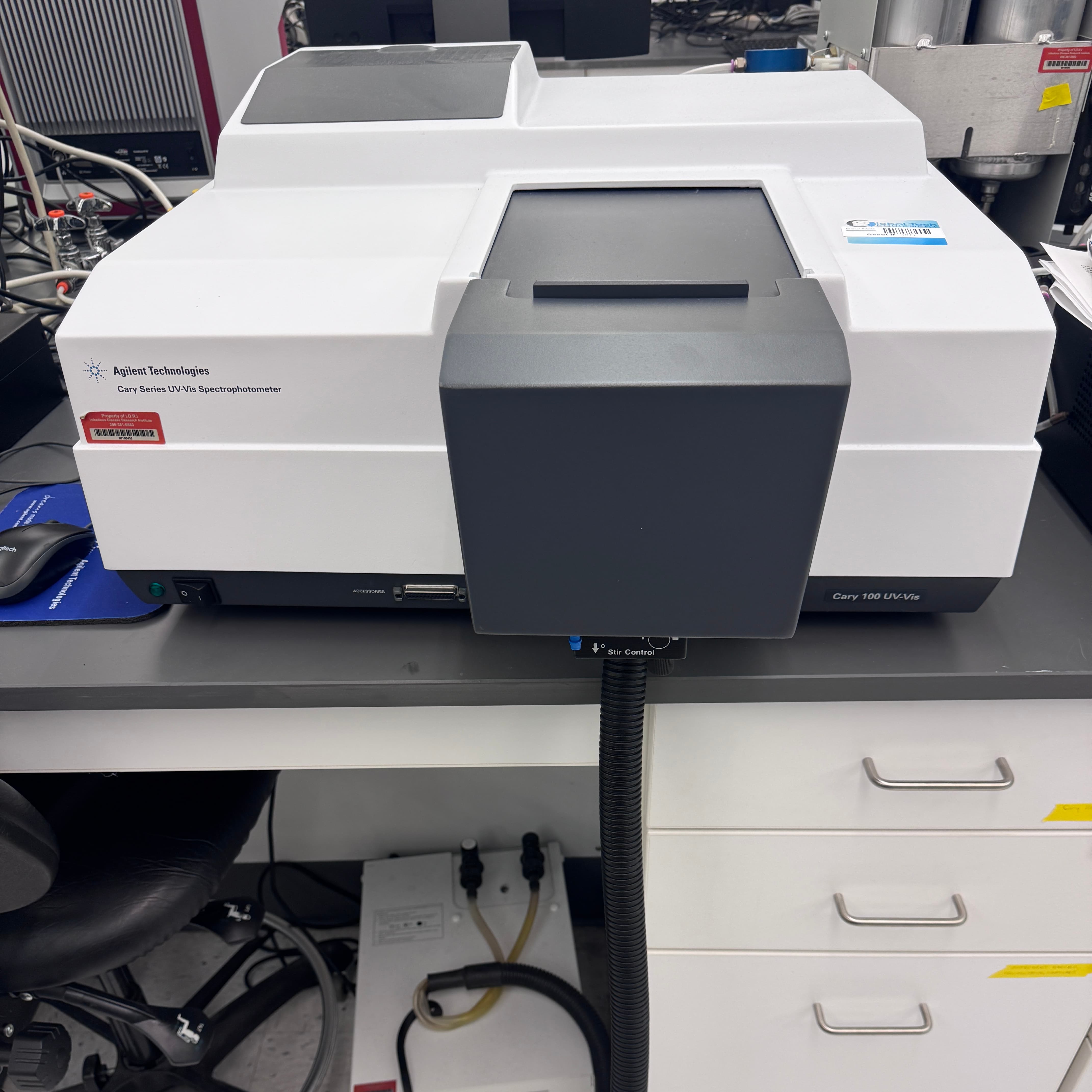
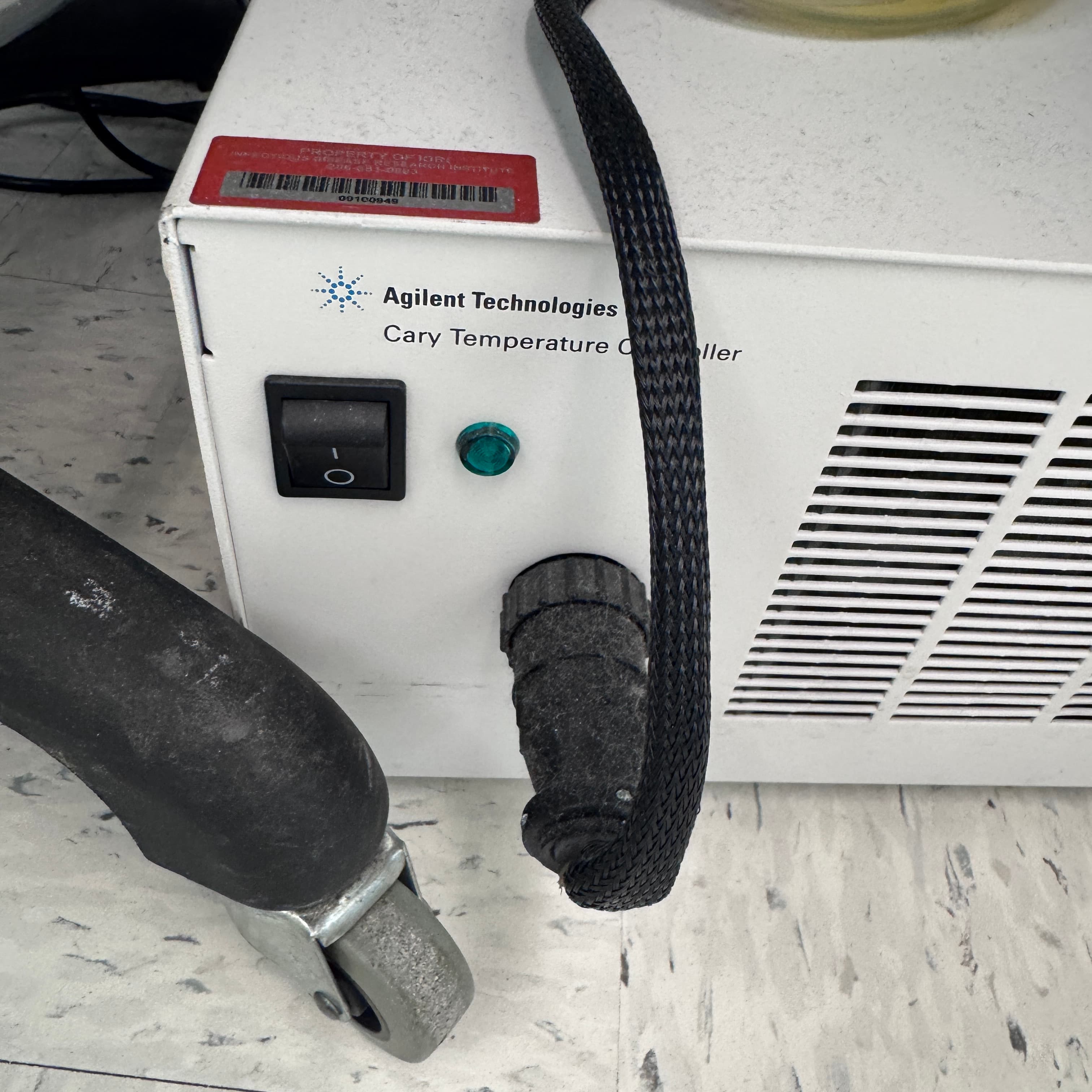
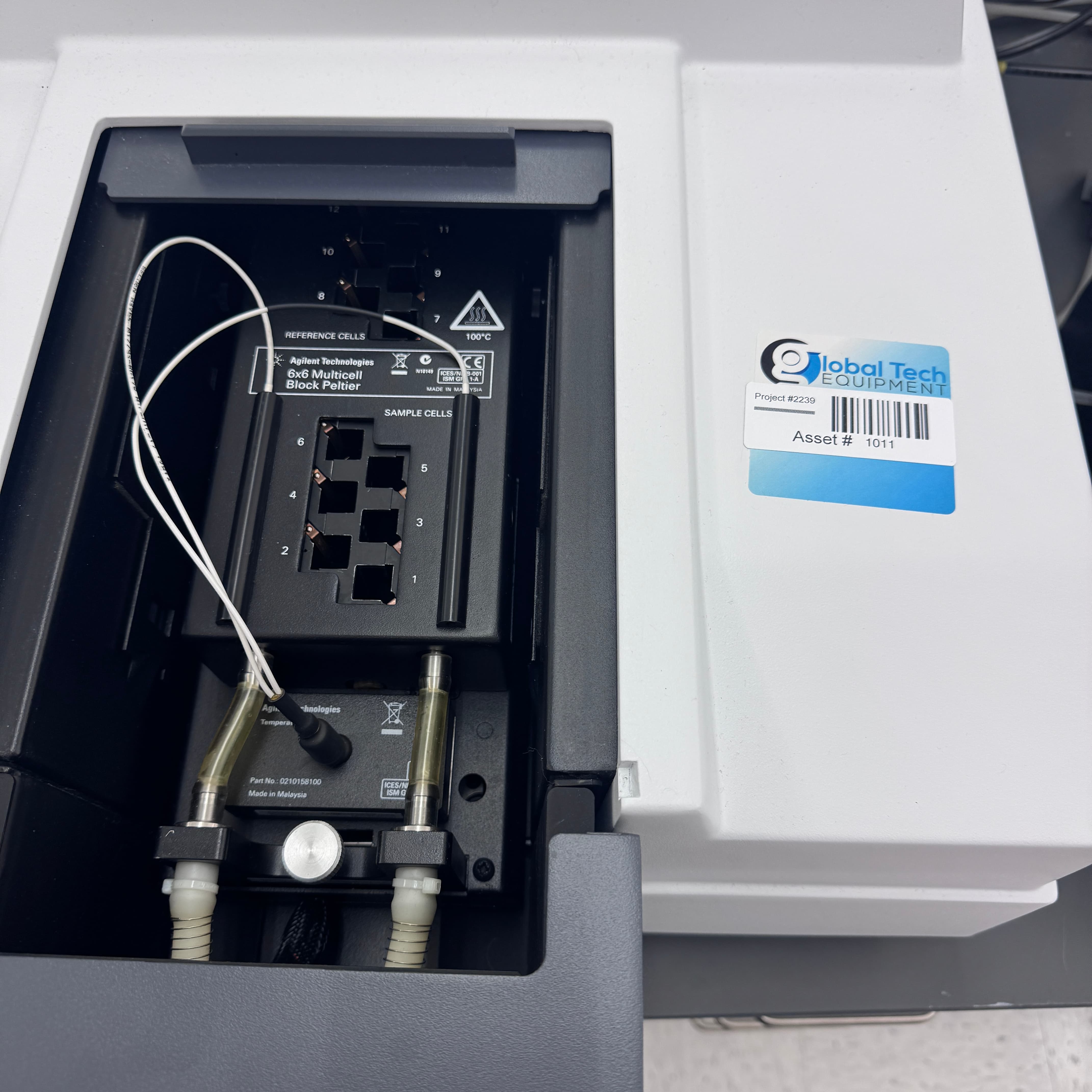
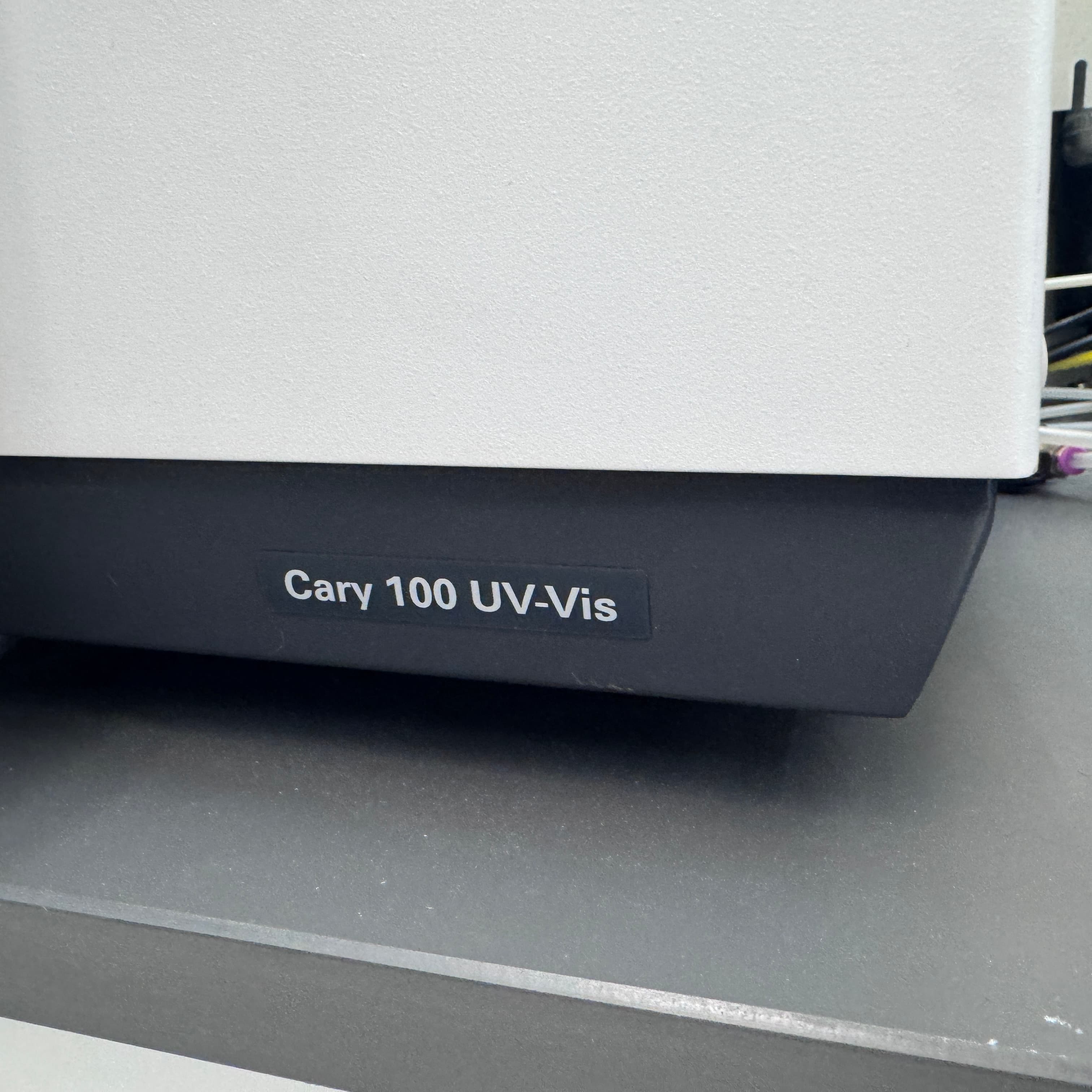
The Agilent Cary 100 UV-Vis Spectrophotometer is a high-performance, double-beam ratio-recording ultraviolet-visible spectrophotometer developed by Agilent Technologies (formerly HP/Agilent) and manufactured in Australia, representing one of the most widely trusted benchtop optical analysis platforms for routine quantitative measurement, method development, and research-grade spectroscopy in pharmaceutical QC/QA, biotechnology, food and environmental testing, university teaching labs, and materials science. The Cary 100 employs a true double-beam optical layout with a high-resolution Czerny-Turner monochromator (1200 lines/mm holographic grating, 278 mm focal length), a dual-chopper modulation system that alternates sample and reference beams onto a single high-sensitivity R928 red-extended photomultiplier tube (PMT) detector, and a proportion-recording circuit that divides the sample beam intensity by the reference beam intensity in real time—this architecture effectively cancels out source intensity fluctuations, drift, and background absorption from the solvent or cuvette, delivering exceptional baseline stability and photometric accuracy even over long scan durations or kinetic runs. The wavelength coverage spans 190 nm to 900 nm (some configurations quote 190–1100 nm with extended detector options), with wavelength accuracy of ±0.2 nm (verified against holmium oxide and mercury emission lines) and wavelength repeatability better than 0.08 nm, while the spectral bandwidth is user-selectable from 0.2 nm to 4.0 nm in 0.1 nm increments via motor-driven slits, allowing the operator to optimize resolution versus signal-to-noise for narrow-band or broad-band samples. Photometric performance is a core strength: the Cary 100 achieves photometric accuracy of ±0.003 A at 1.0 A (traceable to NIST SRM 930 filters), photometric repeatability better than 0.0008 A at 1.0 A, short-term RMS noise less than 8.5×10⁻⁵ AU (0 A, 500 nm, 1 s response), stray light below 0.02 %T at 220 nm (measured with 10 g/L NaI per ASTM E387), and a linear absorbance range extending to at least 3.5–4.0 A (some literature quotes 3.7 A), meaning concentrated samples can often be measured directly without dilution. Illumination is provided by a pre-aligned long-life deuterium lamp for the UV region and a tungsten-halogen lamp for the visible/NIR region, both housed in an easily accessible lamp turret; lamp change is tool-less and does not require recalibration of the optical path. The sample compartment is extra-large (approx. 155 mm wide × 270 mm deep × 165 mm high) with a built-in 12 V/1 A accessory controller (stepper motor driver and thermistor input) in the base, enabling direct plug-and-play connection of Agilent's extensive accessory ecosystem—including Peltier temperature-controlled multicell holders (−10 °C to +110 °C), sipper systems, microvolume cuvettes, solid-sample holders for powder/film reflectance (specular and diffuse), fiber-optic probes, polarization accessories, and integrating spheres—without external power supplies or separate controllers. Data acquisition and instrument control are handled through Agilent's Cary WinUV software suite running on Windows, which provides modular application windows for wavelength scans, time-drive (kinetics), concentration (calibration curve with 1st/2nd/3rd-order polynomial, linear log, or piecewise fit), multi-wavelength measurement, temperature ramps, and advanced features such as peak-picking, baseline correction, derivative spectra, and spectral overlay; the software supports GLP/GMP environments with user login, audit trail, electronic signatures, and method/result archiving in compliance with 21 CFR Part 11 when configured accordingly. Mechanical design details that contribute to long-term reliability include all-quartz-coated optics (protected against corrosive vapors such as HCl or acetic acid commonly encountered in dissolution labs), a sealed optical bench to exclude dust, phase-locked wavelength drive to prevent peak shift during high-speed scans (scan speeds up to 3000 nm/min in fine steps), and a robust cast-aluminum chassis. Typical applications encompass DNA/RNA quantification at 260 nm and protein determination at 280 nm (including A260/A280 purity ratio), enzyme kinetics with temperature control, drug substance assay and related substance identification per pharmacopoeia (USP <857>, EP, JP), measurement of total phenols or nitrate/nitrite in water and wastewater, determination of metal-ion complexes after color development, and characterization of nanomaterials (e.g., gold nanoparticle surface plasmon resonance) or optical thin films via transmission/reflection accessories. The Cary 100 balances analytical rigor with ease of use and low cost of ownership, making it equally suitable as a primary instrument in regulated pharmaceutical release testing and as a versatile teaching/research tool in academic departments.
Technical Specifications – Agilent Cary 100 UV-Vis Spectrophotometer
|
Parameter |
Specification |
|---|---|
|
Model |
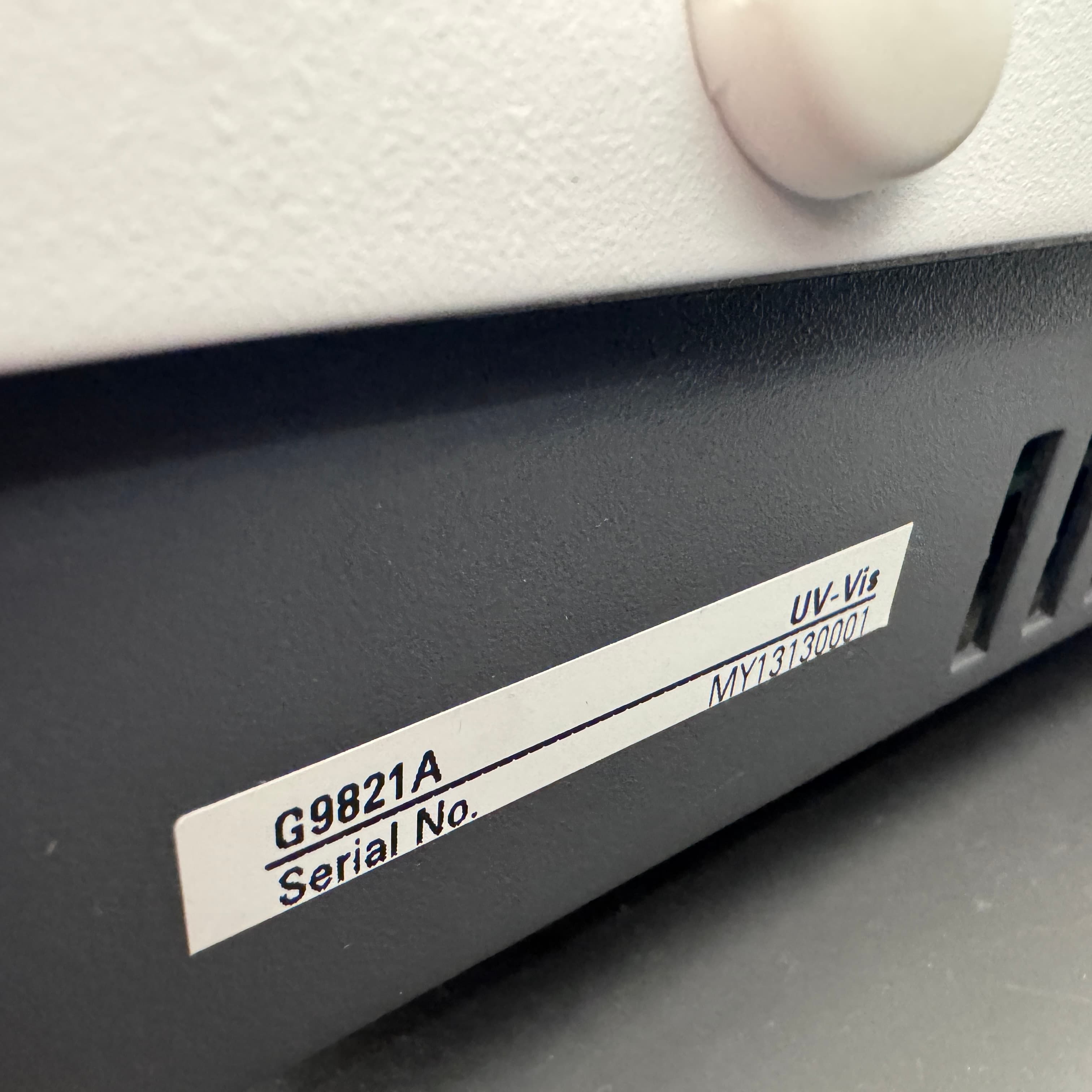
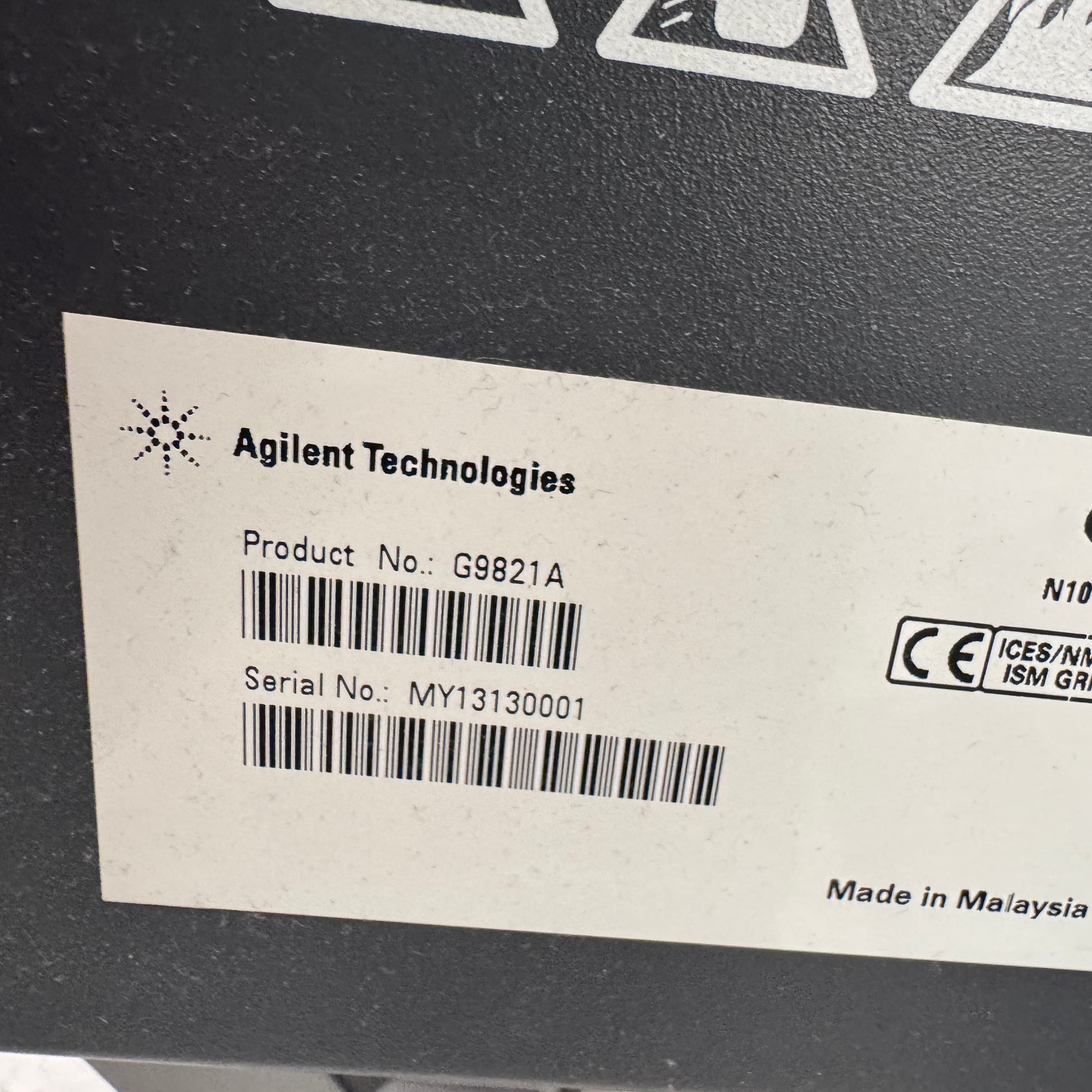
Agilent Cary 100 UV-Vis Spectrophotometer (G9820A / G9821A etc.) |
|
Optical Design |
Double-beam, ratio-recording; Czerny-Turner monochromator |
|
Monochromator |
278 mm focal length; 1200 lines/mm holographic grating; dual chopper |
|
Wavelength Range |
190 – 900 nm (standard); 190 – 1100 nm with extended detector option |
|
Wavelength Accuracy |
±0.2 nm (verified with Hg 546.1 nm, Ho₂O filter) |
|
Wavelength Repeatability |
<0.08 nm |
|
Spectral Bandwidth (Slit) |
0.2, 0.5, 1.0, 2.0, 4.0 nm selectable (0.1 nm step motor-driven) |
|
Photometric Range |
–4.0 to +4.0 A (linear to ≥3.5 A @ 1% deviation) |
|
Photometric Accuracy |
±0.003 A @ 1.0 A (NIST SRM 930E glass filter) |
|
Photometric Repeatability |
<0.0008 A @ 1.0 A |
|
Baseline Flatness |
±0.001 A (full wavelength range, after warm-up) |
|
Baseline Drift |
<0.0003 A/h @ 500 nm (after 2 h warm-up) |
|
RMS Noise |
<8.5×10⁻⁵ AU (0 A, 500 nm, 1 s response time) |
|
Stray Light |
<0.02 %T @ 220 nm (10 g/L NaI, ASTM E387); <0.5 %T @ 198 nm (12 g/L KCl) |
|
Light Sources |
Pre-aligned deuterium lamp (UV) + tungsten-halogen lamp (VIS) |
|
Detector |
Single R928 photomultiplier tube (PMT), red-extended S-20 response |
|
Scan Speed |
0.3 – 3000 nm/min (user-selectable) |
|
Data Sampling Interval |
0.1 nm minimum |
|
Sample Compartment |
Large format: ~155(W)×270(D)×165(H) mm; built-in accessory power & control |
|
Accessory Support |
Temp.-controlled multicell holders, microcells, sippers, solid-sample holder, fiber probe, integrating sphere, polarizer |
|
Software |
Cary WinUV (modular: Scan, Time Drive/Kinetics, Concentration/Calibration, Temperature, Report); 21 CFR Part 11 capable |
|
Interface |
USB, RS-232; PC control via Cary WinUV |
|
Power Requirement |
100–240 V AC, 50/60 Hz, ~250 VA |
|
Operating Temp./Humidity |
15–35 °C, 20–80 % RH (non-condensing) |
|
Dimensions (H×W×D) |
~480 × 620 × 380 mm (19 × 24 × 15 in) approx. |
|
Weight |
~30–35 kg (66–77 lb) depending on configuration |
|
Compliance |
CE marked; conforms to USP <857>, EP, JP; GLP/GMP compatible with audit trail option |
If you'd like a Chinese version or a formatted quotation/inventory sheet, just let me know!
Product Inquiry