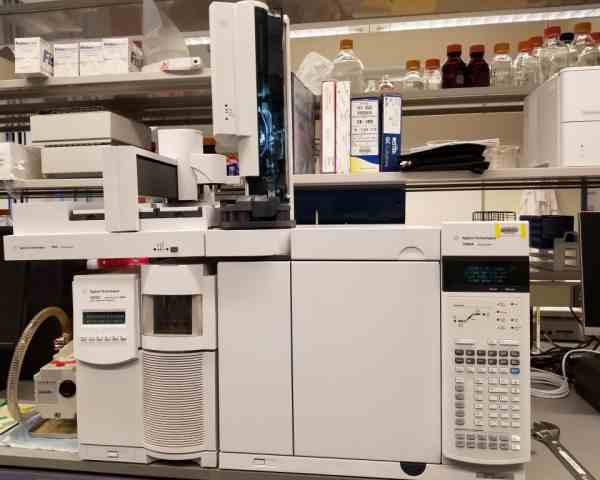
Gas chromatography (GC) detectors are the core components of gas chromatographs, responsible for converting separated sample components into measurable electrical signals. Common types include Thermal Conductivity Detectors (TCD), Flame Ionization Detectors (FID), and Electron Capture Detectors (ECD). During long-term use, detectors are easily contaminated by sample residues, high-boiling components, and fixed-phase losses, leading to increased baseline noise, decreased sensitivity, unstable peak shapes, and even ghost peaks, which seriously affect the accuracy and reliability of analytical results. Regular and standardized cleaning is essential to maintain detector performance, extend service life, and ensure the smooth progress of experiments. This article details the general cleaning principles, step-by-step operations for common detectors, and key precautions, with a total of about 1000 words, providing a practical guide for laboratory operators.
General Principles and Preparation Before Cleaning
The cleaning of GC detectors should follow the principles of "targeted cleaning, gentle operation, and no secondary damage". Different types of detectors have distinct structures and working principles, so cleaning methods and solvents must be selected according to their characteristics. Before cleaning, full preparation is required to avoid equipment damage or safety hazards.
First, turn off the GC power supply and all gas sources (carrier gas, hydrogen, air), and wait for the detector to cool down to room temperature (below 50℃) to prevent scalding and solvent volatilization hazards. Second, prepare cleaning tools and solvents: clean lint-free cloths, syringes, soft brushes, tweezers, and appropriate organic solvents (such as anhydrous ethanol, acetone, methanol) that can dissolve contaminants without damaging detector components. Avoid using corrosive solvents or halogen-containing solvents (e.g., chloroform) to prevent component corrosion or increased noise. Finally, refer to the instrument manual to confirm the disassembly steps of the detector, ensuring familiarity with the structure of vulnerable parts such as nozzles and thermal elements.
Cleaning Methods for Common GC Detectors
1. Thermal Conductivity Detector (TCD) Cleaning
TCD is sensitive to contamination, which mainly manifests as baseline jitter and increased noise. Cleaning is divided into three levels according to the degree of contamination. For mild contamination caused by high-boiling residues, a thermal cleaning method can be adopted: disconnect the chromatographic column, plug the detector interface with a blank ferrule, set the detector temperature to 180-200℃, increase the carrier gas flow rate to 1.5-2 times the normal value, and purge continuously for 2-4 hours to volatilize and remove contaminants. For moderate contamination, disassemble the detector pipeline, soak it in anhydrous ethanol or acetone for 30 minutes, gently brush the inner wall with a soft brush, blow it dry with nitrogen, reconnect it, and purge at 220℃ for 1 hour to remove residual solvents. For severe contamination, remove the thermal element (e.g., rhenium-tungsten wire) with tweezers (wear powder-free gloves to avoid fingerprint contamination), gently wipe its surface with a cotton swab dipped in isopropanol, blow it dry with nitrogen, rinse the detector cavity with anhydrous ethanol 2-3 times, and re-install before performing thermal cleaning and baseline verification.
2. Flame Ionization Detector (FID) Cleaning
FID contamination is mainly concentrated in the nozzle, collector, and detector cavity, with carbon deposits and organic residues being the main pollutants. For mild contamination, there is no need to disassemble the detector: disconnect the chromatographic column, connect the injection port to the detector with a tube, set the detector temperature above 120℃, inject 20μL of distilled water and 50μL of ethanol through the injection port, and keep it warm for 1-2 hours to flush contaminants, then check if the baseline is stable. For severe contamination, disassemble the collector, polarization electrode, and nozzle: soak the quartz nozzle in 5% nitric acid for 2 hours, rinse it with deionized water and anhydrous ethanol, and blow it dry with nitrogen; if the nozzle is blocked, gently unclog it with a 0.1mm stainless steel wire. Wipe the collector with a cloth dipped in methanol to remove carbon black, soak it in 10% sodium hydroxide solution for 1 hour if there are stubborn residues, rinse to neutrality, dehydrate with anhydrous ethanol, and blow dry. Wipe the detector cavity with acetone-soaked absorbent cotton, then purge at 250℃ for 1.5 hours to volatilize residual solvents.
3. Electron Capture Detector (ECD) Cleaning
ECD is sensitive to electronegative substances and contains a weak radioactive nickel source, so cleaning must comply with radiation safety regulations and avoid disassembling the nickel source. For routine cleaning, adopt the solvent flushing method: set the injection port temperature to 200℃, column temperature to 20℃ higher than the maximum boiling point of the sample, and detector temperature to 300℃; inject 10-20μL of anhydrous methanol or dichloromethane through the injection port 3-5 times continuously, and keep the instrument running for 2 hours until the baseline noise is ≤0.1mV. For deep cleaning (when the response value drops by more than 50%), contact professional technicians, wear protective gloves, flush the detector cavity with a 1:1 mixture of n-hexane and acetone under carrier gas pressure for 30 minutes, blow it dry with nitrogen, purge at 320℃ for 4 hours, and conduct a radiation leakage test before use.
Post-Cleaning Verification and Precautions
After cleaning, reassemble the detector in reverse order of disassembly, check whether the sealing gasket is aging (replace if necessary) to prevent carrier gas leakage, and ensure that components such as the nozzle and collector are coaxial. Then turn on the power and gas sources, run the instrument blank, and verify the cleaning effect: the baseline should be stable for more than 30 minutes with noise ≤0.1mV; inject standard samples, and the relative standard deviation (RSD) of retention time and peak area should be ≤2%.
Key precautions: strictly prohibit live operation or cleaning at high temperatures; use tweezers to take cleaned components and avoid direct contact with hands to prevent secondary contamination; select solvents according to the detector material and contaminant properties; ECD cleaning must comply with radiation protection requirements and avoid damaging the nickel source; establish a cleaning record, including cleaning time, method, and verification results, and regularly clean the detector every 50-100 samples according to usage frequency and sample properties.
In conclusion, standardized cleaning of GC detectors is a key link to ensure accurate analytical results. By mastering the targeted cleaning methods for different detectors, following the correct operation steps, and paying attention to safety and protection, laboratory operators can effectively remove contaminants, maintain detector performance, extend equipment service life, and provide a reliable guarantee for the stability and accuracy of gas chromatography analysis.