
Consultation Hotline
+1 (302) 618-8777
+1 (302) 618-8777
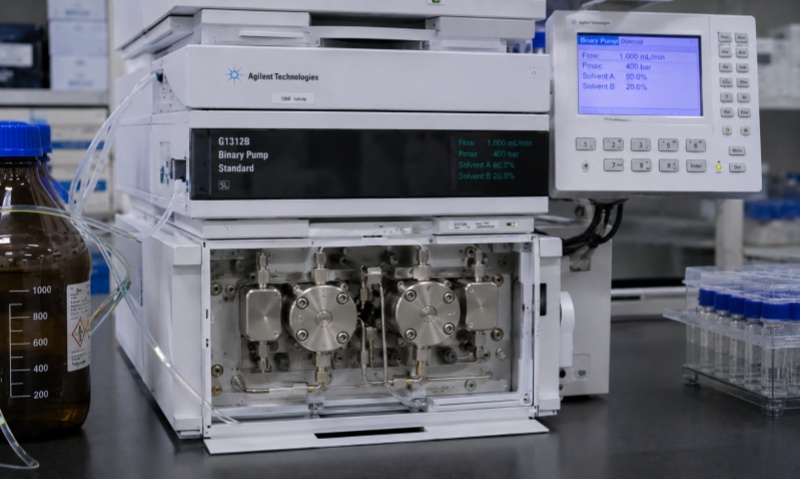
Air bubbles in High Performance Liquid Chromatography (HPLC) systems are a common issue that can significantly affect analytical performance. They may lead to unstable pressure, baseline noise, poor peak shapes, or even pump cavitation. Understanding the causes and applying proper troubleshooting methods is essential for maintaining system reliability.
One of the primary causes of bubble formation is improper solvent degassing. Mobile phases that contain dissolved gases can release air when pressure changes occur in the pump or detector flow cell. This is especially common when using freshly prepared solvents that have not been vacuum degassed, sonicated, or treated with online degassers.
Another frequent cause is leaks in the solvent delivery system. Loose fittings, worn seals, or damaged tubing can allow air to enter the flow path. Even a very small leak on the suction side of the pump can introduce intermittent bubbles, leading to unstable flow and pressure fluctuations.
Low solvent levels in the reservoir can also contribute to air intake. When the solvent bottle is nearly empty, the inlet tube may draw in air instead of liquid. Similarly, improperly positioned inlet tubing or blocked solvent filters can cause inconsistent solvent uptake and bubble formation.
Pump-related issues are another important factor. Worn pump seals, check valve contamination, or insufficient priming can trap air inside the pump head. This often results in pressure ripple and irregular baseline signals. In some cases, improper maintenance after column changes or system shutdowns can also introduce air pockets.
To resolve bubble-related problems, proper solvent degassing should always be the first step. Using an online degasser or performing vacuum filtration and ultrasonication can significantly reduce dissolved gases. Ensuring all fittings are tightly secured and checking for leaks regularly is also essential.
Priming the pump thoroughly before analysis helps remove trapped air in the pump head and tubing. Running the system at higher flow rates for a short period can help purge residual bubbles. Replacing worn seals and cleaning check valves should be part of routine maintenance.
Additionally, maintaining adequate solvent levels and positioning inlet tubing correctly will prevent air intake from the reservoir. Installing in-line filters can also reduce the risk of blockages that lead to bubble formation.
In conclusion, air bubbles in HPLC systems are mainly caused by dissolved gases, leaks, solvent handling issues, and pump malfunctions. With proper preventive maintenance, careful solvent preparation, and routine system checks, bubble formation can be effectively minimized, ensuring stable and accurate chromatographic results.