
Consultation Hotline
+1 (302) 618-8777
+1 (302) 618-8777
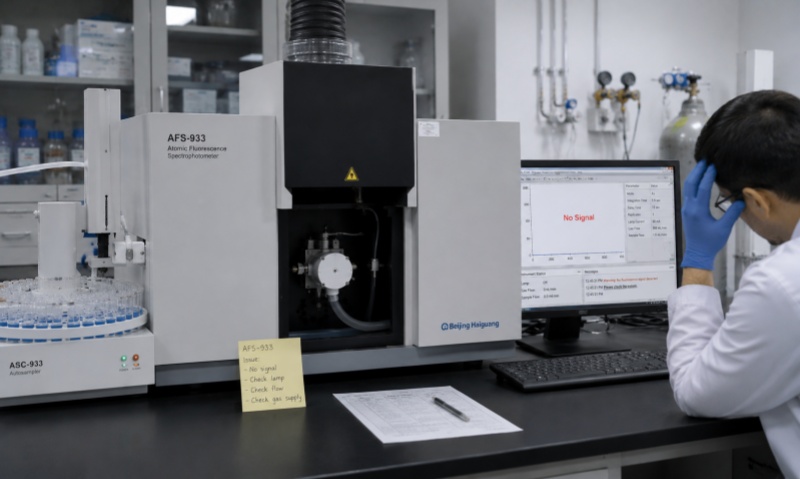
Atomic absorption spectrophotometers (AAS) rely on a stable gas supply system to generate a suitable flame or graphite furnace environment for accurate elemental analysis. The gas path, including fuel gas, oxidant gas, regulators, valves, tubing, and flow controllers, directly affects flame stability, sensitivity, and analytical precision. Therefore, gas path inspection is an essential step during instrument installation, maintenance, and troubleshooting.
Before starting the adjustment, the operator should first check whether the gas supply system meets the instrument requirements. Common gases used in flame atomic absorption spectroscopy include acetylene as the fuel gas and air or nitrous oxide as the oxidizing gas. The gas cylinders should be properly installed, firmly fixed, and equipped with suitable pressure regulators. The cylinder pressure should be checked to ensure sufficient gas supply and prevent unstable operation caused by pressure fluctuations.
The first step of gas path inspection is leak testing. All connections between gas cylinders, pressure regulators, tubing, valves, and the burner system should be carefully examined. A leak detection solution or an electronic gas leak detector can be used to identify possible leakage points. If bubbles appear during testing, the connection should be tightened or the damaged tubing should be replaced. Gas leakage not only reduces analytical accuracy but also creates significant safety risks, especially when using flammable gases such as acetylene.
After confirming that the gas path is sealed, the next step is to check gas pressure and flow rate. The inlet pressure of each gas line should be adjusted according to the manufacturer’s specifications. Excessive pressure may damage internal components, while insufficient pressure can lead to unstable flame conditions. The gas flow controller or mass flow controller should be calibrated to ensure that the fuel-to-oxidant ratio is within the optimal range.
During flame adjustment, the burner head should be correctly positioned and aligned. The operator should ignite the flame and observe its appearance. A normal flame should be stable, uniform, and free from excessive noise or flickering. If the flame shows abnormal characteristics, such as yellow coloration, lifting, or pulsation, the gas ratio, burner position, and gas flow should be adjusted accordingly. For elements requiring higher temperatures, such as aluminum or titanium, nitrous oxide-acetylene flame conditions may be used, requiring more precise gas control.
The nebulizer and spray chamber gas flow path should also be inspected. Blockages caused by salt deposits or sample residues may influence aerosol generation and reduce sensitivity. Cleaning the nebulizer and ensuring smooth gas transport can restore stable analytical performance.
Finally, after completing all gas path adjustments, the instrument should undergo performance verification using standard reference solutions. Stability tests, absorbance repeatability tests, and sensitivity checks should be performed to confirm that the AAS system operates within specifications.
In conclusion, gas path inspection is a critical part of atomic absorption spectrophotometer commissioning and maintenance. Proper checking of gas pressure, leakage, flow control, and flame conditions can significantly improve instrument stability, analytical accuracy, and operational safety. Regular gas system maintenance helps extend instrument service life and ensures reliable elemental analysis results.