
Consultation Hotline
+1 (302) 618-8777
+1 (302) 618-8777
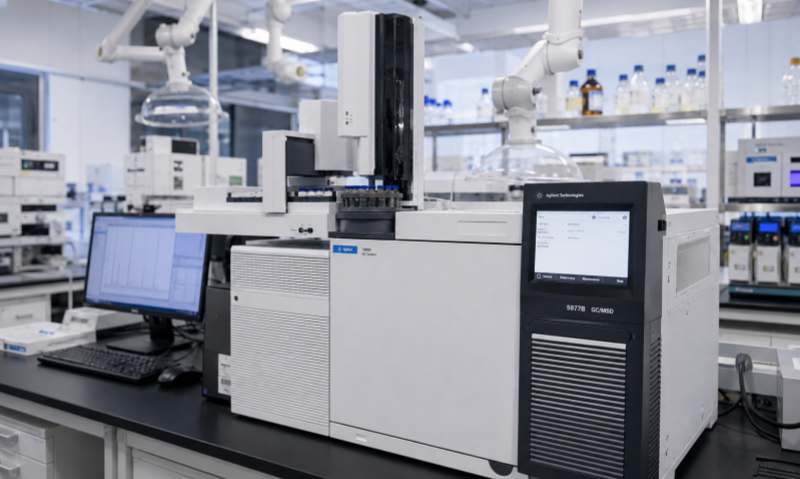
Capillary columns are one of the most important separation components in gas chromatography (GC). The condition of the stationary phase directly affects chromatographic separation, baseline stability, peak shape, retention time, and analytical repeatability. A newly installed capillary column, a column that has been stored for a long period, or a column that has been exposed to sample contamination may require appropriate conditioning before routine analysis.
Proper column conditioning can remove volatile residues and contaminants from the column and help establish a stable baseline. However, incorrect conditioning, such as excessive temperature, insufficient carrier-gas flow, or operation above the column's specified temperature limit, can increase stationary-phase loss and permanently damage the column. Therefore, the conditioning procedure should always follow the manufacturer's specifications.
Capillary column conditioning is a controlled heating process performed while carrier gas flows through the column. The purpose is to remove residual volatile substances, adsorbed materials, and certain contaminants from the column so that the stationary phase reaches a relatively stable operating condition.
For a new column, small amounts of residual material may remain from manufacturing, packaging, or storage. Initial conditioning helps remove these substances before analytical work begins.
For a used column, high-boiling compounds, complex sample matrices, and contaminated samples may accumulate inside the column. Appropriate conditioning may reduce some contamination-related baseline problems. However, severe contamination or irreversible stationary-phase damage cannot necessarily be corrected by conditioning alone.
Column conditioning may be required under several circumstances:
After installing a new capillary column;
After a column has been stored for an extended period;
When baseline noise or background signals increase after column installation;
When persistent baseline drift is observed;
After moderate sample contamination;
After extended analysis of high-boiling-point or complex samples.
However, conditioning should not be treated as a universal solution for all chromatographic problems. Severe peak tailing, peak splitting, abnormal retention times, or significant loss of resolution may also be caused by the inlet liner, septum, carrier gas, detector, fittings, or incorrect column installation.
Before conditioning, identify the column model, stationary-phase type, dimensions, and temperature specifications. Always check the manufacturer's recommended maximum operating temperature and maximum temperature for programmed heating.
Inspect the column installation and confirm that both ends are correctly connected to the inlet and detector.
The carrier gas must have suitable purity. Oxygen and moisture can negatively affect many stationary phases, particularly at elevated temperatures. The carrier-gas supply should therefore meet the requirements of both the GC system and the column manufacturer.
Before heating, confirm that carrier gas is flowing steadily through the column. A capillary column should never be heated to a high temperature without appropriate carrier-gas protection.
The detector side should also be configured according to the manufacturer's recommendations during conditioning.
After installing the column, establish carrier-gas flow and allow the flow to stabilize.
Check the system for leaks and confirm that the column has been installed correctly.
Depending on the column specifications, either constant-temperature conditioning or programmed-temperature conditioning can be used.
A typical approach is to begin at a relatively low temperature and gradually increase the oven temperature. The column can then be held at an appropriate conditioning temperature for a specified period.
The exact temperature and duration depend on the column type, stationary phase, dimensions, and manufacturer's recommendations.
For a new column, the conditioning time should be based on the manufacturer's instructions. Longer conditioning is not necessarily better. Excessive conditioning can increase stationary-phase loss and reduce column lifetime.
During conditioning, monitor the GC baseline whenever practical. A blank run can be used to observe whether background signals gradually decrease and stabilize.
Temperature is one of the most important parameters during column conditioning.
Different stationary phases have different thermal limits. The conditioning temperature must not exceed the manufacturer's specified maximum temperature.
Used columns require additional caution because contaminants may volatilize during heating. Rapidly heating a heavily contaminated column to a high temperature can produce large background peaks and potentially contaminate the inlet or detector.
For a moderately contaminated column, gradual temperature increases may be preferable, allowing contaminants to be released progressively.
It is important to distinguish between the maximum operating temperature, maximum programmed temperature, and recommended conditioning temperature. These values are not necessarily identical.
The maximum temperature listed in a column specification should not automatically be treated as the appropriate conditioning temperature.
There is no universal conditioning time that applies to every capillary column. The actual condition of the column and chromatographic system should be monitored.
Several factors can be used to evaluate conditioning:
First, the baseline should become increasingly stable, with less variation during repeated blank runs.
Second, column bleed should remain within an acceptable range for the column and analytical method.
Third, chromatograms obtained under the same analytical conditions should demonstrate stable retention times and reproducible peak shapes.
If the baseline continues to rise after reasonable conditioning, additional investigation is required. Possible causes include column contamination, excessive temperature, carrier-gas problems, inlet contamination, or column damage.
An increasing baseline may be associated with stationary-phase bleed, contamination, excessive temperature, or deterioration of the stationary phase.
Check whether the conditioning temperature exceeds the column specification. Carrier-gas purity and flow should also be verified.
A small number of background peaks during initial conditioning does not necessarily indicate column failure. However, a large number of persistent peaks may indicate contamination or problems in the carrier-gas or injection system.
Check the inlet, liner, septum, gas supply, fittings, and column condition before continuing the conditioning process.
Poor peak shape after conditioning is not necessarily caused by insufficient conditioning.
Inspect the inlet liner, septum, inlet seal, column insertion depth, detector connection, and overall installation.
Peak tailing or splitting can also result from active sites, leaks, contamination, inappropriate injection conditions, or incorrect flow settings.
If the baseline becomes significantly higher after high-temperature conditioning, the temperature may be inappropriate for the stationary phase.
Do not simply extend conditioning time or continue increasing the temperature. Excessive thermal exposure may accelerate stationary-phase degradation.
Proper maintenance is essential for extending capillary column lifetime.
Minimize the introduction of oxygen, moisture, particulate matter, and highly concentrated contaminants into the GC system.
When analyzing complex samples, appropriate sample preparation can reduce the contaminant load entering the column. Depending on the application, inlet maintenance, sample filtration, or a guard column may also be beneficial.
During long-term instrument shutdown, follow the manufacturer's recommended storage procedure. When the GC system is returned to service, verify carrier-gas purity and system integrity before performing high-temperature operations.
A column-use record can also be valuable. Record the installation date, analytical temperature range, sample types, conditioning history, and abnormal chromatographic observations.
These records can help technicians evaluate column aging and determine whether a performance problem is temporary contamination or an indication that the column has reached the end of its useful life.
Column conditioning involves high-temperature components. Operators should avoid contact with the heated GC oven, inlet, detector, and other hot surfaces.
Carrier-gas flow must be maintained during conditioning. Never heat a capillary column to an elevated temperature without appropriate carrier-gas protection.
When hydrogen is used as the carrier gas, laboratory gas-safety procedures must be strictly followed. The system should be checked for leaks, and appropriate measures should be taken to prevent the accumulation of flammable gas mixtures.
Before servicing or disconnecting the column, allow heated components to cool to a safe temperature and follow the instrument manufacturer's shutdown procedure.
When conditioning does not produce the expected result, a systematic troubleshooting sequence is recommended:
Confirm the column model and stationary-phase specifications.
Verify carrier-gas purity, pressure, and flow.
Check all gas-line connections for leaks.
Inspect the inlet liner, septum, and inlet seal.
Confirm correct column installation depth.
Verify oven temperature settings.
Run an appropriate blank analysis.
Monitor baseline stability and column bleed.
Inspect for sample contamination.
Determine whether further conditioning, column maintenance, or column replacement is appropriate.
Capillary GC column conditioning is an important procedure for preparing new columns, restoring stable performance after storage, and managing certain types of contamination. Proper conditioning can help reduce background signals, stabilize the baseline, and establish reliable chromatographic performance.
The recommended approach is to first confirm the column specifications and carrier-gas conditions, then carefully control the conditioning temperature and duration according to the manufacturer's instructions.
For contaminated columns, gradual heating and continuous monitoring are generally more appropriate than simply applying the highest possible temperature or extending the conditioning period indefinitely.
Most importantly, conditioning cannot repair severe stationary-phase degradation, physical damage, or irreversible contamination. Baseline behavior, column bleed, peak shape, retention time, resolution, and blank chromatograms should be evaluated together before deciding whether a column can continue to be used.
With proper installation, controlled conditioning, regular inlet maintenance, high-quality carrier gas, and appropriate operating temperatures, capillary GC columns can provide stable separation performance and a longer useful service life.