
Consultation Hotline
+1 (302) 618-8777
+1 (302) 618-8777
Current location:Home > Blogs > Industry News
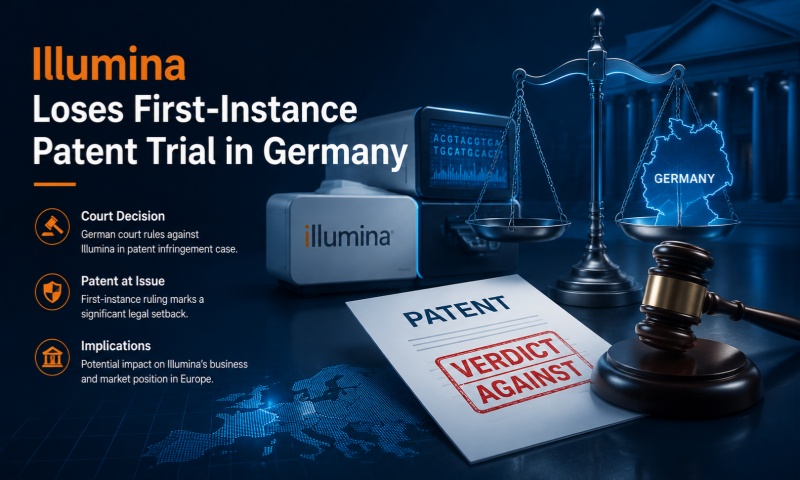
Munich, Germany — July 2026 — The global genomics industry has been shaken by a major patent dispute involving Illumina, one of the world’s leading DNA sequencing technology companies. A German court has issued a first-instance ruling against Illumina in a patent infringement case brought by Element Biosciences, finding that Illumina’s sequencing technology infringed intellectual property rights related to an advanced imaging method used in next-generation sequencing (NGS).
According to the ruling from the Regional Court of Munich I, Illumina and its German subsidiary were found liable for both direct and indirect patent infringement. The court determined that Illumina’s use of the patented sequencing imaging technology, as well as the supply of sequencing instruments, reagent kits, flow cells, and related consumables capable of applying the technology, violated Element Biosciences’ patent rights.
As part of the decision, the court imposed significant commercial restrictions. Illumina was ordered to stop supplying affected sequencing systems and related consumables in Germany. In addition, the company must initiate a recall process for certain previously delivered devices and products covered by the ruling. The decision reportedly affects Illumina’s MiSeq and MiSeqDx sequencing platforms, along with other systems using the disputed imaging technology.
The dispute centers on a key component of modern sequencing technology: high-resolution imaging during DNA sequencing reactions. Next-generation sequencing platforms rely on sophisticated optical systems to detect fluorescent signals generated during nucleotide incorporation. These imaging technologies play a critical role in improving sequencing accuracy, throughput, and cost efficiency.
Element Biosciences argued that Illumina’s sequencing platforms incorporated patented innovations developed to enhance sequencing imaging performance. The German court’s decision represents a significant legal victory for Element, a relatively newer competitor in the sequencing market that has been challenging the dominance of established players through alternative sequencing technologies.
For Illumina, the ruling creates potential operational and financial challenges in one of Europe’s most important biotechnology markets. Germany is a major center for biomedical research, pharmaceutical development, clinical diagnostics, and academic genomics. A sales restriction and recall obligation could affect laboratories, research institutions, and clinical users relying on Illumina sequencing platforms.
However, the first-instance decision does not necessarily represent the final outcome of the dispute. Patent litigation in Germany typically allows opportunities for appeal, and Illumina may seek to challenge the ruling through higher courts. The company has historically defended its intellectual property portfolio and maintained that its technologies are developed independently through significant investment in research and innovation.
The case highlights the increasingly competitive nature of the global sequencing industry. Over the past decade, DNA sequencing has become a critical technology supporting precision medicine, cancer research, infectious disease surveillance, agricultural genomics, and pharmaceutical discovery. As competition intensifies, intellectual property rights have become a central strategic issue among major sequencing companies.
Industry analysts believe the ruling could have broader implications beyond the two companies involved. Patent enforcement decisions in major European markets can influence technology licensing strategies, equipment supply chains, and future research investments. Companies operating in genomics and life sciences may face increasing pressure to carefully evaluate patent landscapes before commercializing advanced technologies.
Element Biosciences stated that the decision confirms the importance of protecting innovation in sequencing technology. Meanwhile, Illumina is expected to evaluate legal options and business strategies following the judgment. The final impact on customers, installed sequencing systems, and future product availability in Germany will depend on subsequent legal proceedings and potential settlements.
The case reflects a larger trend in the biotechnology sector: as sequencing platforms become more advanced and commercially valuable, competition is no longer limited to technological performance alone. Patent ownership, licensing agreements, and global regulatory strategies are becoming equally important factors shaping the future of genomic science.
For researchers and laboratories using sequencing instruments, the development serves as a reminder of the importance of supplier stability, technology diversification, and long-term equipment support. As the global sequencing market continues to expand, intellectual property disputes are likely to remain a defining factor influencing the next generation of genomic innovation.