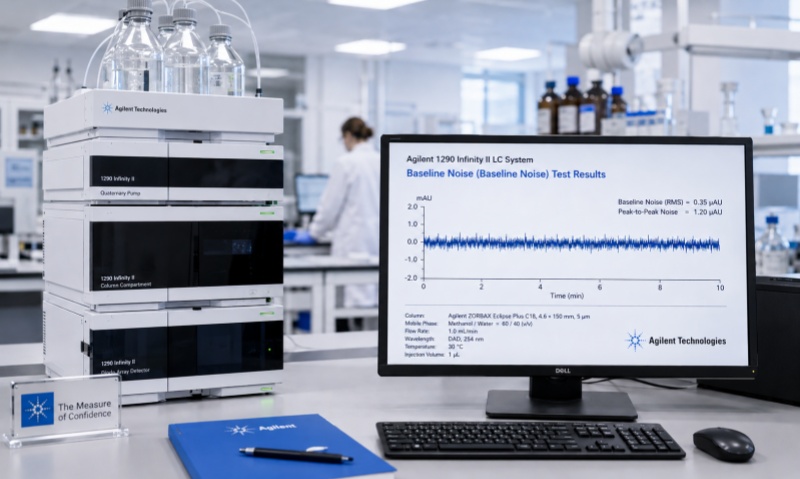
High Performance Liquid Chromatography (HPLC) is one of the most widely used analytical instruments in pharmaceutical testing, food safety, environmental monitoring, chemical analysis and scientific research laboratories. It relies on stable fluid delivery, accurate separation conditions and clean pipeline environments to ensure the repeatability and accuracy of experimental data. As a basic and critical daily maintenance operation, systematic and standardized flushing of HPLC instruments is the core guarantee for maintaining stable instrument performance, extending column service life and avoiding common analytical failures. Many routine instrument faults such as baseline drift, miscellaneous peaks, peak tailing, increased column pressure and poor separation effect are mostly caused by irregular flushing and residual impurities in pipelines and chromatographic columns. Therefore, mastering scientific HPLC flushing specifications is essential for long-term stable instrument operation.
The fundamental purpose of HPLC flushing is to remove residual mobile phase, buffer salts, organic impurities, sample residues and particulate pollutants inside the instrument pipeline, pump body, detector flow cell and chromatographic column. In daily detection work, most mobile phases contain buffer salts, ion-pair reagents and polar additives. These substances are easy to crystallize and precipitate in pipelines after solvent volatilization, causing pipeline blockage and increased system back pressure. In addition, residual sample matrix and organic contaminants will adsorb on the inner wall of pipelines and the surface of column packing, resulting in column efficiency attenuation, contaminated baseline and cross-contamination of subsequent samples. Timely and standardized flushing can completely eliminate these hidden dangers and keep the entire liquid phase system in a clean and stable working state.
Standard HPLC flushing operations are divided into three core scenarios: pre-experiment flushing, post-experiment flushing and long-term shutdown preservation flushing, and each scenario has independent operating specifications. Pre-experiment flushing aims to replace the preservation solvent inside the chromatographic column and balance the system environment. New columns or idle columns are usually stored in high-proportion organic solvents such as methanol or acetonitrile. Before formal detection, it is necessary to use low-flow gradient flushing to replace the preservation solvent, and gradually switch to the experimental mobile phase to avoid solvent mismatch causing column pressure surge and unstable baseline. This step can effectively stabilize the system baseline and ensure the accuracy of sample detection data.
Post-experiment flushing is the most critical link in daily maintenance and the key to prevent permanent damage to the instrument and chromatographic column. For the mobile phase containing buffer salts, direct shutdown is strictly prohibited after the experiment. Residual buffer salts in the system will crystallize rapidly after drying, which will wear the pump seal, block the pipeline and scratch the column packing. The standard operation is to first use ultrapure water for low-speed flushing to completely remove all salt residues in the pipeline and column, then use methanol or acetonitrile to flush organic impurities, and finally maintain high-proportion organic solvent for system preservation. For pure organic mobile phases without salt, direct organic solvent flushing can be adopted to remove residual samples and polar impurities.
In view of different contaminated conditions, targeted enhanced flushing schemes are required. When the instrument has baseline noise, miscellaneous peaks and slight peak distortion, it indicates that the flow cell and pipeline have accumulated organic pollutants. It is necessary to use mixed solvent of water, methanol and isopropanol for circulating flushing to dissolve stubborn adsorbed impurities. When the system pressure is abnormally high, particulate blockage may occur at the pipeline joint or column inlet, and low-flow pulse flushing combined with pipeline inspection can effectively remove particulate deposits. For instruments that have been idle for a long time, aging residual solvents and oxidized impurities in the system need to be thoroughly flushed step by step to restore instrument performance.
Standard flushing operation can greatly reduce the failure rate of HPLC instruments and extend the service life of chromatographic columns. Statistical data shows that laboratories with standardized daily flushing specifications can increase the service life of conventional C18 chromatographic columns by 30% to 50%, and effectively reduce common faults such as pump head blockage, sealing ring wear and detector flow cell contamination. At the same time, stable flushing operation ensures the consistency of mobile phase environment, avoids baseline fluctuation and retention time drift caused by residual impurities, and greatly improves the repeatability and credibility of experimental data, which is of great significance for laboratory data traceability and qualification certification.
In conclusion, HPLC flushing is not a trivial auxiliary operation but a basic guarantee for the long-term stable and efficient operation of the instrument. Laboratory operators must establish standardized flushing habits, formulate targeted flushing processes according to different mobile phase systems and instrument idle conditions, and implement full-process maintenance before, during and after experiments. Scientific and standardized flushing maintenance can effectively reduce instrument failure costs, save experimental consumable expenses, ensure the accuracy and stability of detection data, and provide reliable technical support for various laboratory analytical testing work.