
Consultation Hotline
+1 (302) 618-8777
+1 (302) 618-8777
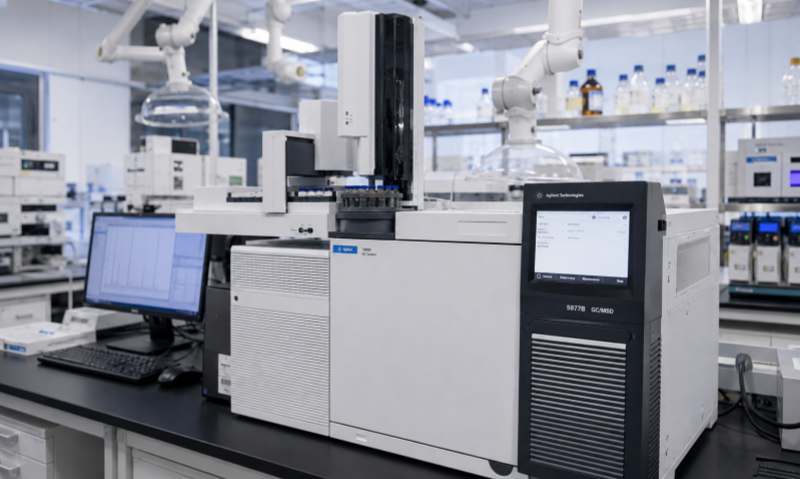
A rotary evaporator, commonly called a rotavap, is a widely used laboratory instrument for removing solvents, concentrating solutions, and recovering volatile compounds. It is extensively applied in pharmaceutical research, chemical synthesis, food analysis, biotechnology, environmental testing, natural product extraction, and other laboratory fields. Its main advantages include efficient evaporation, relatively low operating temperatures, and good solvent recovery performance.
Rotary evaporators are particularly useful when a sample contains a solvent that needs to be removed without exposing the target compound to excessive heat. In pharmaceutical laboratories, they are used for concentrating drug intermediates, recovering organic solvents, and preparing samples for further purification. In chemical synthesis, rotary evaporation is commonly used to remove reaction solvents after synthesis or extraction.
In natural product and biotechnology research, rotary evaporators can concentrate extracts obtained from plants, microorganisms, and other biological materials. They are also widely used in food and environmental laboratories for sample pretreatment and solvent reduction. When equipped with appropriate vacuum pumps and condensers, modern systems can efficiently recover solvents while reducing solvent consumption and laboratory emissions.
The rotary evaporator operates mainly through vacuum reduction, flask rotation, controlled heating, and condensation.
The sample is placed in a round-bottom flask, which rotates continuously in a heated water or oil bath. Rotation creates a thin liquid film on the inner wall of the flask, increasing the effective evaporation area and improving heat and mass transfer.
At the same time, a vacuum pump reduces the pressure inside the evaporation system. Because the boiling point of a solvent decreases as pressure decreases, the solvent can evaporate at a lower temperature than under atmospheric pressure. This is particularly important for heat-sensitive materials.
The generated solvent vapor passes into the condenser, where cooling water or another cooling medium removes heat and converts the vapor back into liquid. The condensed solvent is collected in a receiving flask, while the concentrated sample remains in the evaporation flask.
Leakage is one of the most common problems affecting rotary evaporator performance. A leaking system may show unstable vacuum, slow evaporation, poor solvent recovery, or failure to reach the expected vacuum level.
Typical leakage points include the evaporation flask joint, receiving flask connection, vacuum tubing, sealing rings, condenser joints, vacuum valves, and worn rotary shaft seals. Aging or damaged O-rings, improperly installed glassware, loose clamps, cracked tubing, and contaminated ground-glass joints can all cause air leakage.
A simple preliminary method is to inspect all connections visually and check whether the glassware is correctly installed. Ensure that sealing rings are clean, properly positioned, and free from cracks or deformation.
The most practical method is a vacuum retention test. First, ensure that the system is empty and properly assembled. Start the vacuum pump and allow the system to reach a stable vacuum level. Then close the vacuum valve or isolate the system from the pump and observe the pressure change. If the vacuum decreases rapidly, the system may have a significant leak.
For difficult-to-locate leaks, individual sections can be isolated and tested separately. Vacuum tubing, valves, flask joints, and condenser connections should be checked one by one. In some laboratories, an appropriate leak-detection solution or specialized vacuum leak detector may also be used, provided that it is compatible with the equipment and chemicals.
Regular maintenance can significantly reduce leakage problems. Glass joints should be kept clean, vacuum tubing should be inspected periodically, and damaged O-rings should be replaced promptly. The condenser should be cleaned regularly to maintain efficient heat exchange, while the vacuum pump should receive appropriate oil changes or maintenance according to its design.
Operators should also avoid excessive tightening of glassware connections, because mechanical stress may damage fragile components. Before each operation, checking the vacuum system, sealing components, condenser connections, and receiving flask can help prevent unexpected shutdowns.
In summary, the rotary evaporator combines controlled heating, rotation, vacuum evaporation, and condensation to achieve efficient solvent removal. Understanding its operating principle and mastering systematic leak detection are essential for maintaining stable vacuum performance, improving evaporation efficiency, protecting heat-sensitive samples, and extending the service life of the instrument.