
Consultation Hotline
+1 (302) 618-8777
+1 (302) 618-8777
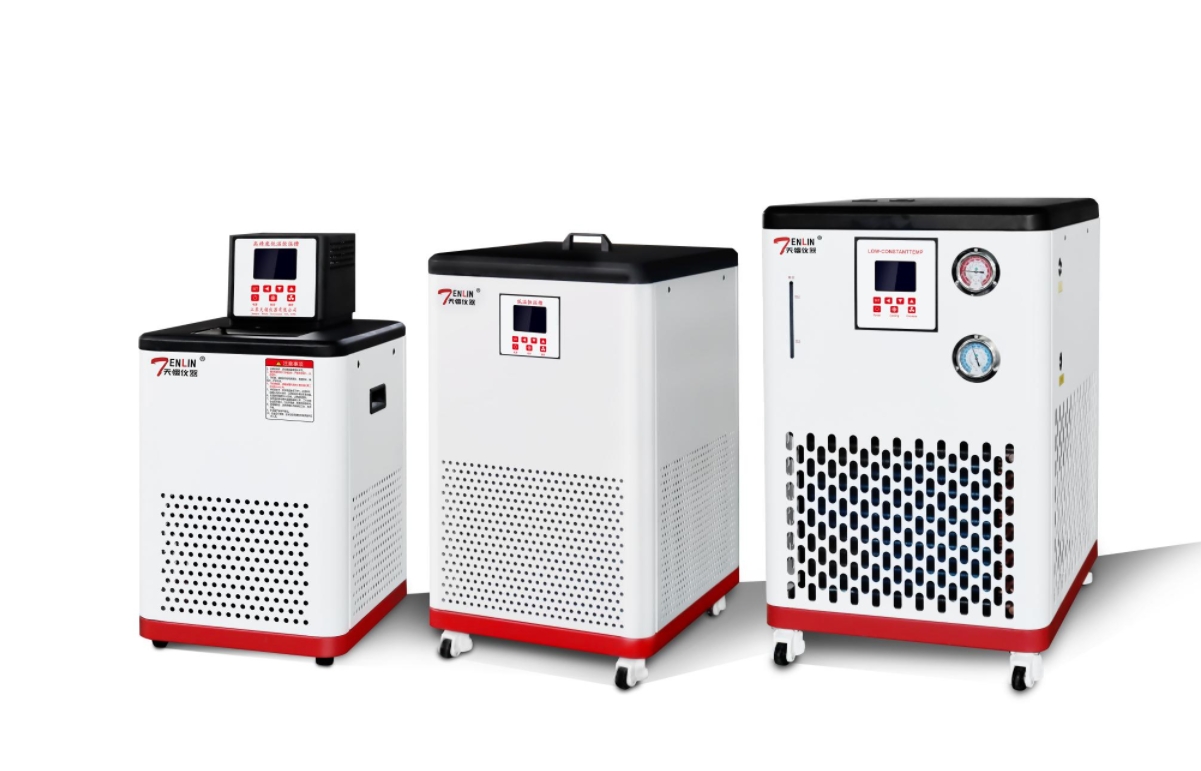
High-precision low-temperature thermostatic baths maintain temperatures typically ranging from -80°C to +150°C with stability of ±0.01°C to ±0.1°C. They operate through a closed-loop system where a circulating fluid is precisely heated or cooled, then pumped through the bath and sample chamber. The system's accuracy depends on the interplay between the refrigeration unit, heating element, circulation pump, temperature sensor, and control system.
Pt100 or Pt1000 platinum resistance thermometers (PRTs): Provide ±0.01°C measurement accuracy
PID controllers with auto-tuning: Maintain stability through proportional, integral, derivative algorithms
High-efficiency compressors: Multi-stage cascade systems for deep cooling
Magnetic drive pumps: Ensure vibration-free circulation
Low-viscosity fluid media: Silicone oil or specialized fluids with optimal thermal properties
Visual Inspection: Check fluid level (maintain 2-3 cm above sample platform), inspect for leaks, verify cleanliness
Power Sequencing: Enable main power, wait 30 seconds for controller initialization, then activate refrigeration
Temperature Setting: Always approach target temperature gradually (maximum 5°C/minute change)
Stability Verification: Allow 30-60 minutes for stabilization; confirm temperature variation <0.05°C over 15 minutes
Temperature Ramping: Gradually increase to 20°C before shutdown (minimum 2°C/minute)
Compressor Protection: Allow 5-minute idle run after stopping cooling
Fluid Preservation: For baths below -20°C, maintain circulation for 10 minutes after reaching 0°C
Cover Installation: Always replace insulated cover to prevent moisture absorption
Fluid Quality Check:
Visual inspection for discoloration or particles
Viscosity test: Flow time increase >15% indicates degradation
pH measurement: Maintain 6.5-7.5 for aqueous solutions
Circulation Path Inspection:
Check pump pressure (typically 0.5-2.0 bar)
Verify flow rate matches specification
Inspect tubing for crystallization or buildup
Perform 3-point verification using NIST-traceable thermometers
Record data at -40°C, 0°C, and +40°C (or operational extremes)
Acceptable deviation: ±0.05°C of set point
Document all calibration results in maintenance log
Condenser Cleaning: Use soft brush and low-pressure air (max 2 bar)
Compressor Inspection:
Check oil level and color (amber = normal, black = contamination)
Monitor running current (±10% of nameplate rating)
Verify refrigerant pressure (high side: 150-250 psi, low side: 10-40 psi)
Evaporator Defrosting: Complete 24-hour defrost cycle monthly
Heater Resistance Check: Measure with multimeter (±5% of initial value)
Heater Calibration: Verify output against controller setting
Safety Thermostat Test: Confirm cutoff function 5°C above maximum set point
Sensor Calibration: Compare against reference PRT with calibration certificate
Controller PID Tuning: Execute auto-tune function with typical load
Alarm Function Test: Verify all alarms (low fluid, overtemperature, etc.)
Drainage: Remove 90% of old fluid through drain valve
System Flushing:
Mild detergent solution at 40°C for 30 minutes
Deionized water rinse (3 cycles minimum)
Isopropyl alcohol rinse for complete drying
New Fluid Charging:
Use manufacturer-recommended fluid only
Degas fluid by stirring under vacuum (if applicable)
Filter through 0.2 µm membrane during filling
Bleeding: Run system at 20°C for 2 hours to remove air bubbles
Pump Bearings: Check for noise/vibration; replace if axial play >0.5mm
Seal Inspection: Verify shaft seal integrity, replace annually or if leaking
Fan and Ventilation: Clean all fans, verify airflow direction
Electrical Connections: Torque check all power terminals
Temperature Uniformity Mapping: 9-point test pattern, max variation ±0.1°C
Temperature Stability Test: 24-hour recording at -40°C, 0°C, +100°C
Ramp Rate Verification: Measure actual vs. programmed rates
Recovery Time Test: Document time to stabilize after door opening
Refrigerant Analysis: Check acidity and moisture content
Compressor Oil Change: If water content >50 ppm
Control Board Inspection: Check capacitors for bulging, connections for corrosion
Safety System Certification: All safety interlocks and cutoffs verified
|
Temperature Range |
Recommended Fluid |
Key Properties |
Change Interval |
|---|---|---|---|
|
-90°C to +100°C |
Silicone oil |
Low viscosity, high flash point |
12-18 months |
|
-50°C to +150°C |
Synthetic fluid |
Low viscosity, thermal stability |
12 months |
|
-30°C to +80°C |
Aqueous glycol |
Non-toxic, economical |
6-9 months |
|
0°C to +200°C |
Mineral oil |
High flash point |
12 months |
Viscosity at 20°C: Should not exceed 150% of new fluid
Water Content: Maximum 200 ppm (Karl Fischer titration)
Acidity: Neutral (pH 6.5-7.5 for aqueous)
Particulate Contamination: <20 particles/mL >10µm
Symptom: Oscillation >0.1°C
Possible Causes:
PID parameters need retuning
Insufficient fluid volume
Pump cavitation
Sensor placement too close to heater
Corrective Action:
Perform auto-tune with typical load
Adjust fluid to proper level
Check for restrictions in circulation path
Reposition sensor in flow stream
Symptom: >30% longer than specified cool-down time
Diagnostic Steps:
Clean condenser fins
Check refrigerant pressure
Verify door seals integrity
Test fluid viscosity
Corrective Measures:
Replace dirty air filters
Service refrigeration system if pressure abnormal
Replace door gaskets if compressed thickness <70%
Clearance: Minimum 30 cm on all sides for airflow
Ambient Temperature: 18-25°C optimal, never exceed 32°C
Humidity Control: Maintain 30-70% RH to prevent condensation
Power Quality: Dedicated circuit with proper grounding; voltage fluctuation <5%
Set temperature to 4°C when not in use overnight
Utilize programmable temperature ramps
Maintain full fluid level to optimize thermal mass
Clean heat exchangers quarterly for maximum efficiency
Daily log: Temperature stability, fluid level, unusual observations
Weekly report: Calibration checks, fluid condition
Monthly summary: Performance metrics, preventive maintenance completed
Annual certificate: Full calibration and performance validation
Basic: Daily operation, fluid handling, safety procedures
Intermediate: Calibration, troubleshooting, fluid replacement
Advanced: Refrigerant handling, controller programming, performance validation
Certification: Annual competency assessment with practical examination
Cryogenic handling: Insulated gloves for temperatures below -20°C
Fluid exposure: Chemical-resistant gloves and eye protection
Electrical safety: Lock-out/tag-out procedures for maintenance
Fire prevention: Class C fire extinguisher within 10 meters
Spill response: Contain and absorb with inert material
Electrical fault: Immediate power disconnect at main breaker
Fluid ignition: Use CO₂ extinguisher, never water
Medical emergency: Eye wash station within 10-second access
Temperature uniformity test at two set points
Accuracy verification with NIST-traceable thermometer
Response time measurement after 10% load change
Alarm function verification
Chart temperature stability over time
Track compressor run time vs. set point
Monitor energy consumption per degree of cooling
Calculate mean time between failures (MTBF)
Implementing this comprehensive maintenance program typically extends equipment life by 40-60%, reduces energy consumption by 20-30%, and ensures measurement uncertainty remains within 0.05°C of true temperature. Regular maintenance not only preserves capital investment but also ensures the integrity of temperature-sensitive research and quality control processes dependent on these precision instruments.