
Consultation Hotline
+1 (302) 618-8777
+1 (302) 618-8777
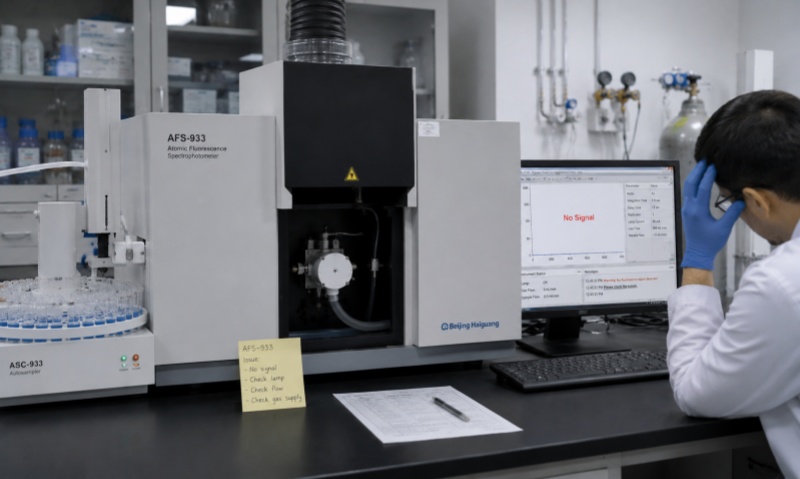
Large high and low temperature test chambers are widely used in aerospace, automotive, electronics, semiconductor, materials research, pharmaceuticals, and environmental testing industries. These chambers are designed to simulate extreme temperature conditions and evaluate the performance, reliability, and durability of products under different thermal environments.
A common failure encountered during operation is that the chamber temperature cannot rise to the set value or the heating process becomes extremely slow. This problem can affect test accuracy, interrupt production schedules, and reduce laboratory efficiency. The causes may involve the heating system, temperature control system, electrical components, sensors, airflow circulation, or software settings.
This article provides a detailed technical analysis of the causes and repair methods for large high and low temperature test chambers experiencing temperature rise failures.
When a high and low temperature test chamber cannot increase temperature normally, the fault usually comes from several key areas:
Heating system failure
Temperature control system abnormality
Sensor measurement errors
Power supply or electrical component problems
Air circulation system failure
Control software or parameter setting errors
A systematic inspection should be performed from simple causes to more complex components.
Before inspecting hardware, confirm that the chamber settings are correct.
Possible problems include:
Incorrect temperature program settings.
Wrong temperature limit parameters.
Incorrect heating rate setting.
Control mode accidentally switched.
Temperature alarm activated.
For example, if the target temperature is set at 80°C but the heating limit is configured at 40°C, the chamber will stop heating before reaching the required temperature.
Check the temperature set point on the controller.
Confirm the heating program.
Verify upper and lower temperature limits.
Check whether the controller displays alarm codes.
Reset the temperature program.
Restore factory parameters if necessary.
Clear abnormal alarm conditions.
The heating system is the core component responsible for temperature increase. If heating components fail, the chamber temperature will remain unchanged or rise very slowly.
Large environmental test chambers usually use electric heating tubes, heating plates, or stainless-steel heating elements.
Common failures:
Heating wire burnout.
Heater aging.
Insulation damage.
Open circuit inside the heating element.
Temperature remains close to room temperature.
Heating indicator does not operate.
Current consumption is lower than normal.
Disconnect the power supply.
Measure heater resistance using a multimeter.
Compare measured resistance with rated specifications.
Replace damaged heating elements.
Regular inspection of heater insulation resistance is recommended to prevent unexpected shutdowns.
Large temperature chambers commonly use solid state relays to control heater power.
A damaged SSR may cause:
Heater cannot receive power.
Heater remains permanently off.
Intermittent heating problems.
Check SSR input control voltage.
Measure output voltage during heating operation.
Check whether the SSR indicator operates.
Replace the failed SSR.
Ensure the new SSR has the same voltage and current rating.
Apply thermal conductive paste if required for heat dissipation.
The temperature sensor provides feedback information to the controller. If the sensor is inaccurate, the controller may incorrectly stop heating.
Common sensors include:
Platinum resistance sensors (PT100).
Thermocouples.
Sensor aging.
Wiring damage.
Loose connection.
Incorrect calibration.
Display temperature does not match actual temperature.
Temperature fluctuates abnormally.
Heating stops too early.
Check sensor wiring.
Measure sensor resistance.
Compare readings with standard values.
Replace or recalibrate the sensor.
For high-precision testing, temperature calibration should be performed regularly.
A large high and low temperature chamber requires stable electrical power. Electrical problems can directly affect heating performance.
Possible causes:
Insufficient voltage.
Phase loss in three-phase power systems.
Loose wiring terminals.
Circuit breaker failure.
Measure input voltage.
Check electrical connections.
Inspect contactors and terminals.
Repair wiring connections.
Replace damaged breakers.
Ensure stable power supply.
The contactor controls power delivery to the heater.
Failure symptoms:
Controller operates normally.
Heater receives no power.
Clicking sound absent during heating.
Repair:
Check contactor coil voltage.
Inspect contact points.
Replace burned contacts or the complete contactor.
Temperature uniformity depends heavily on proper air circulation. If airflow is insufficient, heat cannot be distributed effectively.
Possible causes:
Circulation fan failure.
Fan motor damage.
Blocked air duct.
Incorrect fan speed.
Temperature rises very slowly.
Some areas are hot while others remain cold.
Temperature uniformity becomes poor.
Check fan operation.
Measure motor voltage.
Remove dust from air channels.
Replace damaged fan motors.
Although insulation problems usually do not completely prevent heating, severe heat loss can make temperature rise extremely slow.
Common causes:
Damaged door gasket.
Poor insulation material.
Door not closed properly.
Check door sealing condition.
Perform a visual inspection for cracks.
Check whether hot air escapes around the door.
Replace damaged sealing strips.
Adjust door hinges.
Repair insulation layers.
Modern high and low temperature chambers use programmable controllers and computer-based monitoring systems.
Possible problems:
PID parameters incorrect.
Control output failure.
Communication errors.
Program interruption.
Check PID heating parameters.
Perform controller self-test.
Restore correct control settings.
Update or reinstall monitoring software.
Improper PID settings may cause slow heating, overshoot, or unstable temperature control.
When a large high and low temperature test chamber cannot increase temperature, technicians should follow this sequence:
Confirm temperature settings and operating mode.
Check alarm information from the controller.
Verify heater operation and electrical output.
Inspect SSR, contactors, and power circuits.
Check temperature sensor accuracy.
Inspect circulation fan operation.
Check insulation and door sealing.
Calibrate the temperature control system.
This approach can quickly locate the fault while avoiding unnecessary replacement of components.
To reduce temperature rise failures, laboratories should perform regular maintenance:
Clean electrical cabinets and remove dust.
Check heater resistance periodically.
Test temperature sensor accuracy.
Inspect SSR and contactors.
Clean circulation fans and air ducts.
Calibrate temperature annually.
Check door seals regularly.
Preventive maintenance improves temperature accuracy, extends equipment lifetime, and reduces unexpected downtime.
The failure of a large high and low temperature test chamber to increase temperature can result from multiple factors, including heater damage, SSR failure, sensor errors, power problems, airflow issues, and controller abnormalities. Accurate diagnosis requires a systematic inspection from control parameters to hardware components.
By following professional troubleshooting procedures and implementing regular preventive maintenance, laboratories can restore chamber performance quickly and ensure reliable temperature testing results for research, quality control, and industrial applications.