
Consultation Hotline
+1 (302) 618-8777
+1 (302) 618-8777
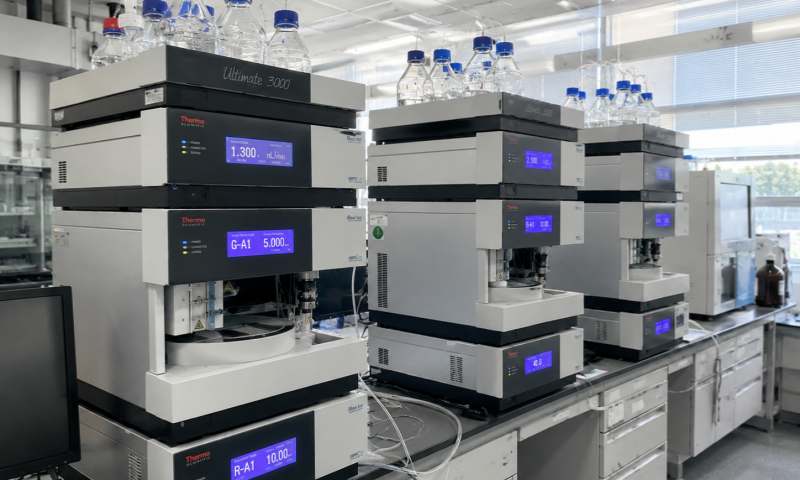
High-performance liquid chromatography (HPLC) is widely used in pharmaceutical, chemical, food, environmental, and biological laboratories. Agilent HPLC systems are designed to provide high separation efficiency and reproducible analytical performance. However, poor peak shape, especially peak splitting or double peaks, is a common chromatographic problem. Understanding the underlying mechanism and applying systematic troubleshooting methods can help restore peak symmetry, resolution, and analytical accuracy.
An ideal chromatographic peak should be relatively symmetrical, with a smooth rise and fall around its apex. In practice, peaks may become tailing, fronting, broadening, or split into two or more peaks. Peak splitting generally indicates that the sample is experiencing two different flow paths, interaction environments, or injection conditions during chromatographic separation.
For an Agilent HPLC system, peak splitting may originate from the injection system, column, mobile phase, tubing connections, detector cell, or sample itself. It is therefore important to identify whether the problem occurs with all peaks or only specific compounds.
Peak splitting occurs when the injected sample does not enter the chromatographic column as a uniform plug. If part of the sample travels through one path while another portion experiences a different path or retention environment, two partially separated signals may appear.
One common cause is poor connection between the injector and column. A damaged ferrule, incorrect fitting depth, dead volume, or partially blocked tubing can create abnormal flow distribution. If the sample enters the column unevenly, the resulting chromatographic band may separate into two apparent peaks.
Another important cause is a mismatch between the sample solvent and the mobile phase. If the sample is dissolved in a solvent that is significantly stronger than the initial mobile phase, the sample may not focus properly at the head of the column. This can produce distorted or split peaks, particularly for early-eluting compounds.
Column problems can also produce peak splitting. A void, contaminated inlet frit, damaged stationary phase, or partially collapsed packing bed can create multiple flow paths through the column.
When peak splitting suddenly appears, the injection system should be inspected before replacing expensive components.
Check the autosampler needle, needle seat, sample loop, injector valve, and associated tubing for blockage, leakage, or contamination. Insufficient or inconsistent sample injection can produce abnormal peak shapes.
Run a blank injection followed by a standard solution. If the standard also shows splitting, the problem is more likely to be associated with the instrument or column rather than the sample matrix.
It is also useful to inspect the column inlet connection. Tubing should be cut cleanly and installed according to the manufacturer's recommended fitting procedure. Avoid excessive dead volume between the injector and column.
If only one column produces split peaks while another column provides normal peak shapes under identical conditions, the column is a strong suspect.
Inspect the guard column and column inlet for contamination. A heavily contaminated guard column can cause uneven flow and poor sample focusing. If the problem appeared gradually, column contamination or aging is particularly likely.
Flush the column using a solvent compatible with the stationary phase and following the manufacturer's recommended procedure. Do not exceed the pressure, pH, temperature, or solvent limits of the column.
If flushing does not restore performance, compare the suspect column with a known-good column. A persistent split peak strongly suggests column damage or a disturbed packing bed.
Mobile-phase preparation is another critical factor. Incorrect solvent composition, inadequate mixing, contamination, dissolved gas, or unstable pH can affect retention and peak shape.
Prepare fresh mobile phases using appropriate solvents and high-quality water. Confirm the proportion of organic solvent and buffer components. Check whether the mobile phase has been properly filtered and degassed when required.
The sample solvent should also be considered. Ideally, the sample should be dissolved in a solvent that is compatible with the initial mobile-phase conditions. If the sample solvent is significantly stronger than the starting mobile phase, reducing the injection volume or changing the sample diluent can improve peak focusing.
Unstable flow can cause retention-time variation and poor peak shape. Monitor system pressure during analysis. Sudden pressure fluctuations may indicate air bubbles, a blocked frit, leakage, or pump problems.
For Agilent HPLC systems, purge the pump when necessary and confirm that the solvent lines are properly primed. Inspect pump seals, inlet filters, and solvent connections if pressure remains unstable.
Column temperature should also remain stable. Temperature fluctuations can change retention and selectivity, particularly for temperature-sensitive separations.
A systematic troubleshooting sequence is more efficient than randomly replacing components:
Inject a blank and a known standard.
Check whether all peaks or only specific compounds are affected.
Inspect the autosampler needle, injector, tubing, and fittings.
Check the sample solvent and injection volume.
Prepare fresh mobile phase and verify its composition.
Inspect pressure stability and pump performance.
Check the guard column and column inlet.
Test the method with a known-good column.
If necessary, inspect detector flow cells and downstream connections.
In conclusion, peak splitting in an Agilent HPLC system is usually related to non-uniform sample introduction, excessive dead volume, solvent mismatch, column damage, contamination, or unstable flow conditions. By identifying whether the problem originates from the injection system, mobile phase, column, or instrument hardware, technicians can troubleshoot efficiently and avoid unnecessary component replacement. Regular maintenance, correct installation, appropriate sample preparation, and consistent operating conditions are essential for achieving sharp, symmetrical, and reproducible HPLC peaks.