
Consultation Hotline
+1 (302) 618-8777
+1 (302) 618-8777
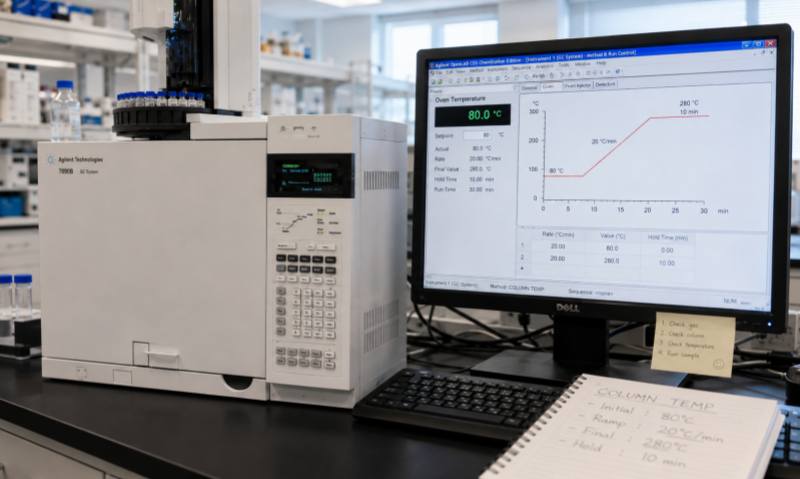
Gas chromatography (GC) columns are essential components of gas chromatographs, directly affecting separation efficiency, retention time, peak shape, and analytical accuracy. During routine use, GC columns may experience contamination, stationary-phase degradation, leaks, column breakage, or reduced separation performance. Proper maintenance and timely troubleshooting can extend column service life, improve analytical reliability, and reduce laboratory operating costs.
However, GC columns are precision components. Incorrect cleaning, excessive heating, improper cutting, or unsuitable storage can cause irreversible damage. Understanding the correct maintenance procedures is therefore essential for laboratory technicians and instrument service engineers.
Before attempting any repair, identify the symptoms and determine whether the problem originates from the column or another part of the GC system.
Common symptoms include:
Peak tailing: May result from active sites, contamination, damaged column ends, or unsuitable inlet conditions.
Poor peak resolution: May be caused by stationary-phase degradation, incorrect temperature programming, column contamination, or improper flow settings.
Increasing baseline noise: Can indicate column bleed, contamination, gas impurities, or detector problems.
Unstable retention times: May result from carrier-gas flow fluctuations, leaks, temperature instability, or column damage.
High column bleed: Often occurs when the column is operated above its temperature limit, exposed to oxygen at elevated temperatures, or used beyond its service life.
Do not immediately replace the column when these symptoms appear. First inspect the carrier-gas supply, inlet liner, septum, detector, fittings, and oven temperature control.
Capillary GC columns are usually made of fused silica with a thin protective outer coating. They are relatively fragile and must be handled carefully.
Before removing a column, cool the oven, shut down the relevant gas flow according to the instrument manufacturer's procedure, and allow the system to reach a safe condition. Wear appropriate eye protection and gloves when handling a damaged column.
Avoid bending the column sharply, pulling it under tension, or scratching its protective coating. Never force a column into a fitting that does not match its diameter.
Inspect the column for visible cracks, broken ends, damaged coating, or signs of contamination. If the fused-silica tubing is cracked or broken, replacing the damaged column is generally safer and more reliable than attempting structural repair.
Trimming a short section from the inlet end is a common maintenance procedure when contamination or a damaged cutting surface causes poor peak shape.
Follow these steps:
Remove the column according to the manufacturer's instructions.
Use a dedicated capillary-column cutting tool.
Make a clean, square cut without crushing the tubing.
Inspect the cut end for chips, cracks, or an uneven surface.
Reinstall the column at the specified insertion depth and tighten the fitting according to the manufacturer's guidance.
Check for leaks before returning the instrument to analytical service.
Only trim a small section when appropriate. Excessive trimming shortens the column and may change its installation position. If performance does not improve after trimming, investigate contamination, stationary-phase damage, and other instrument components.
Column conditioning helps remove residual volatile contaminants and stabilize the baseline. It must be performed under suitable conditions.
First, confirm that the carrier gas is sufficiently pure and that the column installation is leak-free. For oxygen-sensitive stationary phases, ensure that oxygen and moisture are excluded before heating.
Set the conditioning temperature and duration according to the column manufacturer's recommendations. The maximum permissible temperature varies with stationary-phase chemistry and operating conditions.
Never exceed the specified temperature limit. Excessive heating can accelerate stationary-phase degradation, increase column bleed, and shorten service life.
Do not condition a column while it is connected to a detector if the procedure could expose the detector to excessive contamination. Follow the GC manufacturer's recommended configuration.
Preventive maintenance is usually more effective than attempting to recover a severely contaminated column.
Recommended practices include:
Use clean, appropriately prepared samples and suitable sample filtration where applicable.
Replace the inlet septum and liner according to their condition and laboratory maintenance schedule.
Use high-purity carrier gas and appropriate gas traps.
Avoid injecting nonvolatile residues or highly contaminated samples directly into the system.
Install suitable guard columns or retention gaps when the analytical method requires them.
Monitor baseline stability, retention times, peak shape, and system suitability results.
Keep records of column installation dates, sample types, operating temperatures, and maintenance activities.
These practices help identify gradual performance deterioration before it significantly affects analytical results.
When a GC column is removed from service, allow it to cool and follow the manufacturer's storage instructions. Seal both ends with suitable column caps or connectors to prevent moisture and contaminants from entering.
Store the column in its original protective packaging, away from excessive heat, humidity, dust, and mechanical stress. Label it with its stationary phase, dimensions, installation history, and condition.
When reinstalling the column, verify the correct flow direction if specified, insertion depths, ferrule compatibility, and operating parameters. After installation, perform a leak check and confirm that the baseline and retention times are acceptable before analyzing valuable samples.
Not every column problem can be corrected through maintenance. Replacement is generally recommended when the column has significant physical damage, persistent high bleed, irreversible stationary-phase degradation, or unacceptable separation performance despite appropriate troubleshooting.
If repeated trimming and conditioning do not restore performance, further intervention may waste valuable laboratory time. Compare the column's performance against the original method requirements before deciding whether to replace it.
Proper gas chromatography column maintenance requires careful inspection, correct trimming techniques, controlled conditioning, contamination prevention, and appropriate storage. Technicians should always follow the column manufacturer's specifications and the GC instrument's service procedures.
By identifying problems early and avoiding improper repair methods, laboratories can extend column life, maintain reliable analytical performance, and reduce unnecessary replacement costs.